
August 28, 2026 · 7-min read
How to Track Initiative Without Slowing Down Combat
Nobody sits down to play D&D hoping to spend twenty minutes rebuilding the turn order after a monster dies.
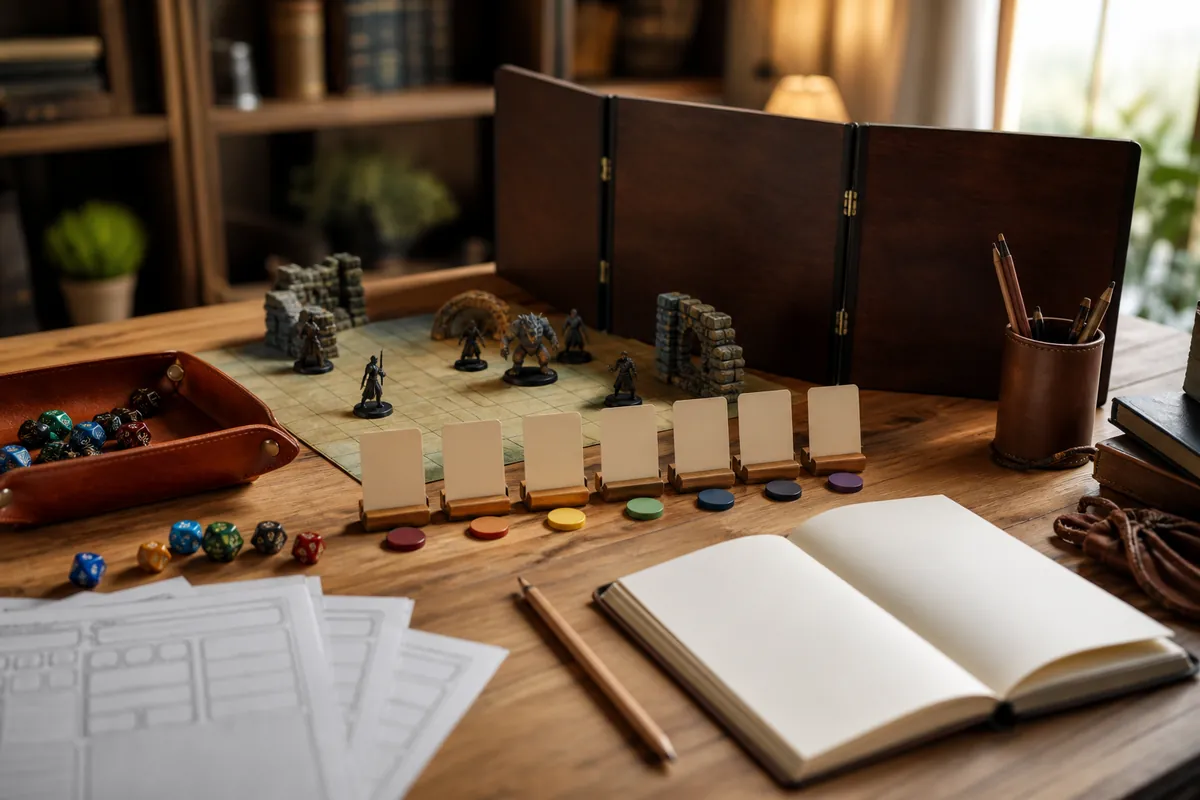
The fastest way to track initiative in D&D is a visible, shared list, ordered high to low, that every player can see and update themselves. Skip the mental math, skip passing a laptop around, and skip rebuilding the order from memory after every death or new arrival. The system matters less than whether everyone at the table can look at it and instantly know whose turn is next.
If you have ever watched a combat round grind to a halt while the DM flips back through notes trying to remember who went after the goblin that just dropped, you already know the problem is not the rules. It is the tracking method. Here is how to fix it for good.
How do I set up initiative at the start of combat?
Before the first die hits the table, get the mechanics locked in fast.
- Call for rolls all at once. Everyone rolls a d20 and adds their Dexterity modifier at the same time, out loud, rather than one at a time. This alone saves a surprising amount of time.
- Write numbers down as they're called. Use a whiteboard, a dry-erase card, or a notes app, whatever is visible to the whole table, not just you.
- Sort high to low. Highest total acts first, and play proceeds down the list.
- Handle ties immediately. The DM's Basic Rules break ties by comparing Dexterity scores, highest going first. If that's also tied, just decide or have them reroll against each other. Don't debate it, just pick a rule and move on.
- Slot in monsters as a block or individually, whichever you find easier to run. Many DMs give an entire group of identical monsters one initiative slot, then resolve their turns in whatever order makes sense.
Once the list exists, it stays for the whole combat. You do not reroll each round.
What's the best physical system for tracking turn order?
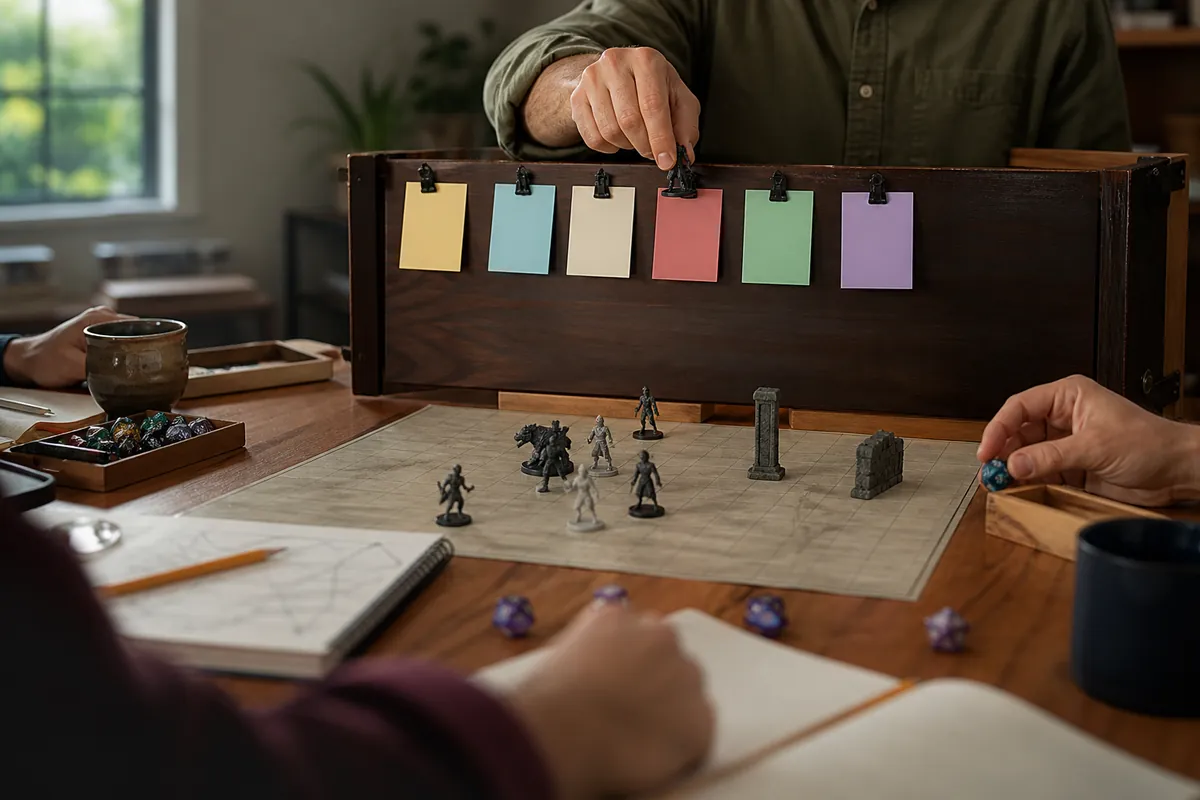
For a table with a physical DM screen and printed materials, index cards beat almost everything else for speed.
- Write one name per card, with the initiative number in the corner.
- Line the cards up in order along the top of your DM screen or on the table.
- When a creature dies or flees, pull the card. When something new joins, slide a card into the right spot.
- Flip or slide a marker (a die, a paperclip, a mini) down the row to show whose turn it is right now.
This works because it is entirely visual. Nobody has to ask "wait, whose turn is it?" because the marker's position answers the question without anyone speaking.
A dedicated initiative tracker sheet does the same job with more structure built in, giving you columns for HP, conditions, and legendary actions right next to each name so you are not flipping between three different pieces of paper mid-fight.
Should I track HP and conditions on the same sheet?
Yes, and this is where a lot of tables lose time without realizing it.
If your initiative order lives on one page and monster HP lives in your notes and conditions live in your head, you are doing three lookups every single turn. Combine them.
A good combat tracker sheet should have, per combatant:
- Name and initiative number
- Current HP (with a spot to cross off damage)
- Active conditions (poisoned, prone, restrained, and so on)
- Legendary or lair action reminders, if relevant
Understanding what those condition names actually mean matters here too. If you're fuzzy on the mechanical difference between restrained and grappled, our guide to D&D 5e conditions explained breaks down what each one actually does at the table, which speeds up rulings considerably when you're not stopping to look it up mid-turn.
How do I keep combat moving once initiative is set?
Tracking turn order is only half the battle. Slow turns are usually the bigger time sink, and they compound with a messy tracker.
- Warn the next player. As soon as one turn starts, tell the next person in line "you're on deck," so they're planning their move instead of scrolling their phone.
- Set a soft time limit. A relaxed 15-20 seconds to decide an action keeps players engaged without rushing anyone into a bad call.
- Pre-roll damage dice when a player knows they're about to attack, so they're not rolling, adding, and announcing in three separate steps.
- Resolve simple monster turns fast. Not every goblin needs a dramatic pause. Move, attack, done.
If turns themselves are dragging regardless of how clean your tracker is, it's worth reading how long a D&D turn should actually take, since the initiative system and turn pacing are two separate problems that often get blamed on each other.
What should I do when initiative changes mid-fight?
New combatants and dead ones are where trackers usually fall apart. Handle both with a rule you decide in advance, not on the fly.
Reinforcements arriving:
- Roll initiative for them the moment they act or are noticed.
- Slot them into the existing order at the matching number, rather than tacking them onto the end.
- If they roll higher than the current active turn, they act next round in their new slot, not immediately, unless a specific ability says otherwise.
Someone dropping out:
- Remove them from the tracker the instant they die, flee, or are knocked unconscious.
- Don't leave a "ghost" turn where you announce "skip, they're dead" every round. Pull the card or cross the line out.
What if my table is running combat digitally?
Apps and virtual tabletops can absolutely work, but they introduce their own slowdowns if you're not careful. A few habits help:
- Project or share the initiative list so players see it too, rather than only the DM.
- Pre-load monster stat blocks before combat starts, not mid-fight.
- Keep a physical backup, even just a scrap of paper, in case the app hangs or your table loses wifi at the worst moment.
Whichever format you use, the goal is the same one as the index card method: nobody at the table should ever have to ask whose turn it is.
A quick note on paper backups
However you run initiative day to day, it helps to have a printed reference on hand that doesn't depend on battery life or an internet connection. A simple sheet with initiative slots, HP tracking, and space for conditions covers most of what a combat round throws at you, and it's one less thing to build from scratch before a session.
If you'd rather not sketch one out yourself, the DM Toolkit Bundle includes a printable initiative tracker alongside encounter and loot log pages and NPC cards, built for exactly this kind of table-ready use. It's a small thing, but having it printed and sitting next to your screen removes one more excuse for combat to stall. You can browse the rest of the shop if you're after other printable DM references too.
Get the initiative math sorted before session zero, pick a tracking format your table will actually stick to, and combat stops being the part of the night everyone dreads. The system doesn't need to be fancy. It just needs to be visible.
Parchment & Dice is not affiliated with Wizards of the Coast. Rules content referenced here is drawn from the D&D 5e SRD 5.1.
Frequently asked questions
- What is the correct way to track initiative in D&D 5e?
- Roll a d20 plus Dexterity modifier for every combatant at the start of combat, list everyone from highest to lowest on a visible tracker, and move down that list one turn at a time until the round ends and it repeats from the top.
- Do I need to reroll initiative every round?
- No. Standard 5e rules have you roll initiative once at the start of combat and keep that order for every round unless a specific spell, feat, or house rule says otherwise.
- What happens when two creatures roll the same initiative?
- The rules suggest the higher Dexterity score goes first, and if that also ties, the DM decides the order or has the tied creatures roll again to break it.
- Should players track their own initiative?
- Yes, having each player note their own initiative number and pass a tracker or turn marker along speeds things up because the DM does not have to manage every entry alone.
- What's the fastest tool for tracking initiative at a physical table?
- A dry-erase index card tracker or a printed initiative sheet next to the DM screen tends to beat apps and digital trackers for speed, since there is no screen to unlock, no app to tap through, and everyone at the table can see it at a glance.
- dm tools
- combat
- initiative
- dnd 5e
- game master tips
Related reading
- How to Divide Spell Slots Across a Long Rest D&D DayLearn how to manage spell slots in D&D by budgeting them across an adventuring day instead of spending them all in the first fight.
- How to Make a D&D Magic Item Feel Legendary, Not Just UsefulLearn how to make DnD magic items feel special with sensory detail, personality, and history instead of just stat bonuses.
- How to Split Loot in D&D 5e Without Party ArgumentsLearn how to split loot in dnd 5e with equal coin shares, fair magic item claims, and a simple system for tracking shared party treasure.