August 26, 2026 · 7-min read
How to Read a D&D Encounter's Difficulty Before You Run It
A five-minute gut check that catches the encounters that would otherwise wreck your session.
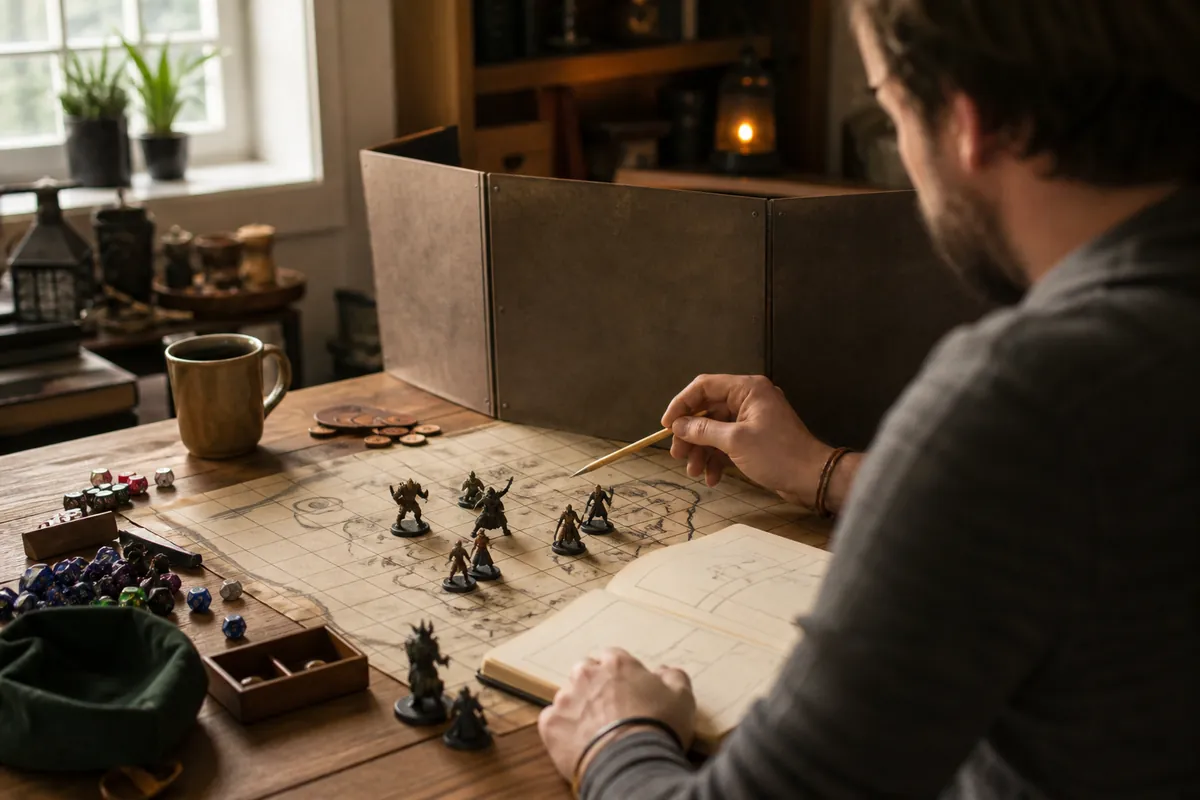
You can tell if a D&D encounter is too hard by checking three things before you run it: how many turns the enemies get compared to your party, how much damage they can realistically deal in the first two rounds, and whether any single monster ability can remove a character from the fight outright. If two of those three look bad, the encounter needs a second pass.
This isn't about redoing your whole build. You've already picked the monsters and the scene works for the story. What you need is a fast gut check, the kind an experienced DM runs almost automatically, so you're not discovering the problem mid-combat when a player is already unconscious.
How do I check an encounter's difficulty fast?
Run through this before you sit down to play:
- Count total turns on each side. Four monsters against four players means the monsters act as often as the party, which already tilts things.
- Estimate two rounds of incoming damage. Add up the average damage every monster can plausibly deal in two rounds, using average damage rather than max rolls.
- Compare that total to your party's HP pool. If two rounds of monster damage can drop one or two characters to zero, you have a hard fight on your hands, not a scary-but-fine one.
- Scan for single-target lockdown. Grapples, paralysis, banishment-style effects, or anything that takes a character fully out of the fight for more than a round.
- Check the terrain and positioning. A fight in a narrow corridor or over a chasm can be far deadlier than the same monsters in an open room.
If you want the full build process rather than this shortcut, Building Your First Balanced Encounter walks through it from scratch.
What does the action economy tell me?
Action economy is the single biggest predictor of how an encounter actually plays out, more than XP totals or challenge rating.
Every extra creature on the enemy side is an extra turn, an extra set of attacks, and an extra saving throw your players have to force. A lone powerful monster is dangerous but predictable: it acts once, your party reacts once. A pack of six weaker monsters can be far scarier, because your party is spending actions on crowd control instead of dealing damage, and every monster turn is another chance for a bad roll to go against them.
A useful rule of thumb: once the enemy side has more total turns than your party, you're no longer fighting "the monsters," you're fighting "the numbers." That's not automatically too hard, but it's the signal to run the damage math in the next section before you commit.
How much damage can my party actually take?
This is the part most difficulty guides skip, and it's the part that matters most.
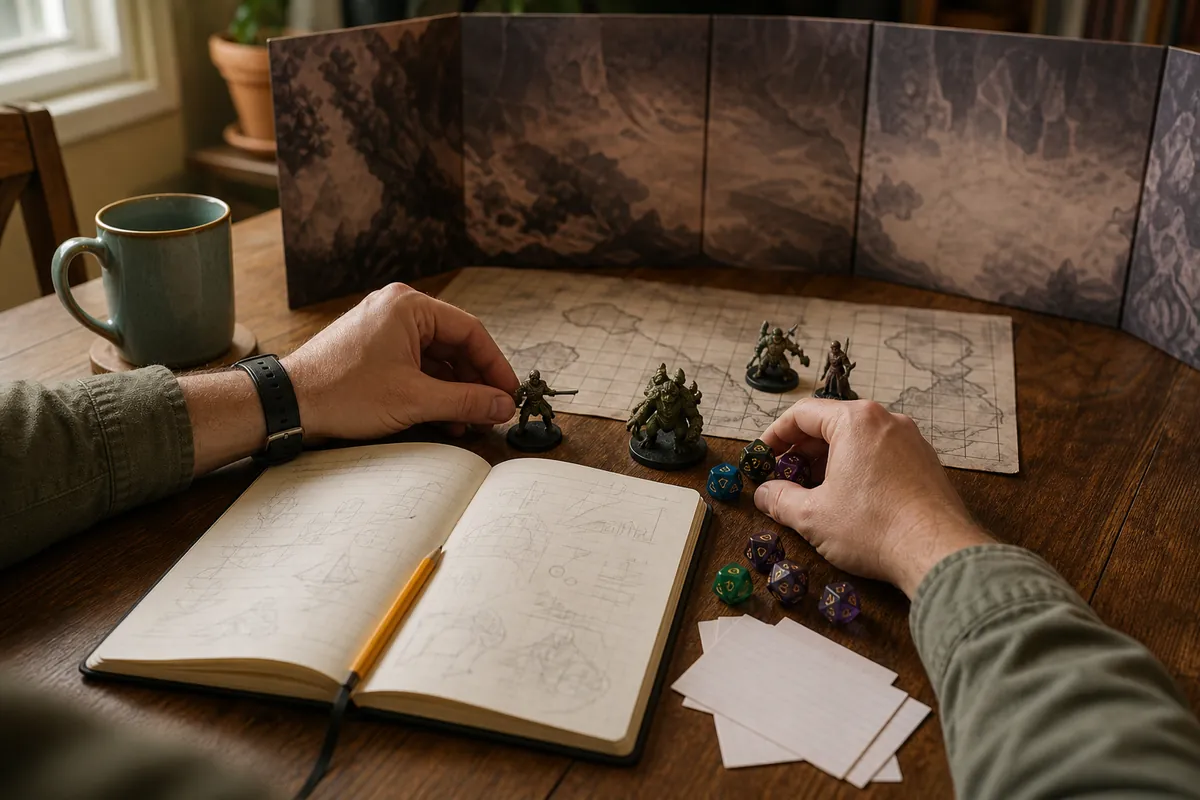
Take each monster's average damage per round (not its maximum), multiply by the number of monsters, and multiply by two rounds. That's a rough floor for what your party absorbs before anyone can meaningfully respond with healing or retreat.
Now compare that number to your party's combined HP, or more specifically to your squishiest character's HP. If a single monster's average damage output can one-shot your party's rogue or wizard, that's worth knowing in advance, not discovering when the dice land badly.
If damage math isn't something you enjoy doing by hand mid-prep, D&D Average Damage: Formula, Dice Table and Rounding has the shortcuts. And once the fight is over, How Much XP to Level Up in D&D 5e? Levels 1–20 Table has the full XP table and shows how to split the reward across the party.
A few damage red flags worth flagging on their own:
- Any monster whose single attack can deal more than half a typical party member's max HP.
- Multiattack monsters where the total per-round damage looks fine on paper but lands entirely on one target.
- Recharge abilities (breath weapons, area attacks) that hit the whole party at once rather than one character.
What monster traits turn "hard" into "too hard"?
Raw damage is only half the picture. Some abilities make an encounter feel unfair even when the damage math checks out, because they take a player out of the decision-making entirely.
Watch for these on any monster in the fight:
- Multiattack stacked on a monster with a high to-hit bonus, since it multiplies both damage and the chance nothing misses.
- Legendary actions, which let a single monster act between player turns and effectively erase your party's numbers advantage.
- Save-or-suck effects like paralysis, petrification, or banishment, especially against characters with a weak save in that category.
- Grapple and restrain combos that lock down your front-line character while the rest of the enemies focus someone squishier.
- Area damage that hits multiple party members before anyone gets a turn to react.
If you're unsure what a stat block's abilities actually do at the table, How to Read a D&D Stat Block: Monster Symbols Explained breaks down exactly what to look for in the trait list.
How do I fix it without rebuilding the encounter?
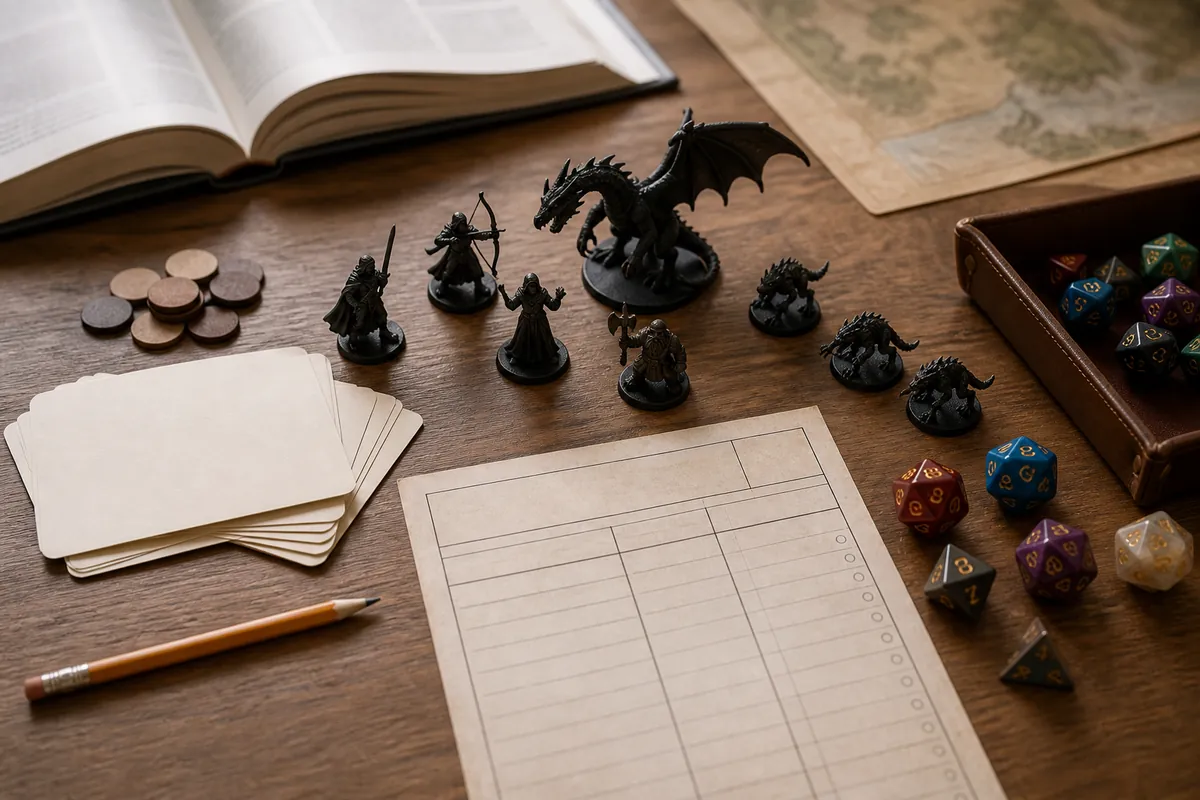
If your gut check flags a problem, you don't need to start over. These fixes take two minutes and preserve the encounter you already built:
- Drop one monster. Removing a single weaker creature cuts both damage output and enemy turns at once.
- Split the arrival. Have half the monsters show up a round or two late instead of everyone alpha-striking on round one.
- Cap the worst-case ability. If a monster has a save-or-suck effect, consider giving it a recharge or one-use limit instead of at-will.
- Add one piece of cover or terrain your party can use, which effectively reduces incoming damage without touching the monster stats.
- Plan a mid-fight out. Decide in advance that the monsters retreat, negotiate, or a reinforcement arrives if the party drops below half HP. You don't have to use it, but having the option ready means you can adjust live instead of watching a TPK unfold.
For the fights that get away from you despite all this, How to Handle a TPK Without Ending the Campaign is worth reading in advance, not after.
Keeping the numbers straight during the fight
Once you're happy with the difficulty check, the harder part is often just tracking it live: monster HP, conditions, initiative order, and who's carrying what loot once the dust settles. A lot of DMs end up running that math on scratch paper mid-combat, which is exactly when mistakes creep in. If that's been slowing your sessions down, the DnD Encounter and Loot Tracker Printable is built to keep monster HP, conditions, and drops on one sheet instead of three. It won't tell you if an encounter is balanced, but it makes running the one you've already checked a lot smoother. There's a wider set of DM tools in the shop if you're after more.
Not affiliated with Wizards of the Coast.
Frequently asked questions
- How do I know if a DnD encounter is too hard before I run it?
- Compare the number of enemy turns to the number of player turns, estimate how much damage the monsters can deal in two rounds, and check for any single ability that could remove a character from the fight. If two of those three point toward trouble, scale the encounter down before running it.
- Is the official XP budget enough to judge difficulty on its own?
- No. XP budgets are a starting point, not a guarantee. Action economy, monster abilities like multiattack or legendary actions, and the terrain can all push an encounter well past what the XP math suggests.
- What is the fastest way to make an encounter easier at the table?
- Drop one enemy from the fight, or have the toughest monster act with less than full tactical intelligence for the first round or two. Both changes buy your party breathing room without you having to redesign anything.
- How many monsters is too many for a four-person party?
- As a rough guide, once the enemy side has more total turns than your party, the action economy starts working against your players regardless of individual monster strength. Four or more separate enemies against a four-person party is usually the point to slow down and check the math.
- Should I nerf an encounter mid-fight if it's going badly?
- Yes, and most tables do it quietly. Have a monster miss more, target objects instead of characters, or retreat a turn early. It is far better than a fight ending in a character death nobody wanted.
- dnd 5e
- dm advice
- encounter design
- combat balance
- game prep
Related reading
- How to Divide Spell Slots Across a Long Rest D&D DayLearn how to manage spell slots in D&D by budgeting them across an adventuring day instead of spending them all in the first fight.
- How to Make a D&D Magic Item Feel Legendary, Not Just UsefulLearn how to make DnD magic items feel special with sensory detail, personality, and history instead of just stat bonuses.
- How to Split Loot in D&D 5e Without Party ArgumentsLearn how to split loot in dnd 5e with equal coin shares, fair magic item claims, and a simple system for tracking shared party treasure.