October 16, 2026 · 7-min read
How to Divide Spell Slots Across a Long Rest D&D Day
Stop panicking about whether to cast that fireball. Here's how to budget your magic like you budget a paycheck.
To manage spell slots in D&D, treat them as a budget for the whole adventuring day, not just the next fight: estimate how many encounters you'll face before your next long rest, then decide upfront how many slots you'll allow yourself to spend per encounter so you don't run dry halfway through.
Most new spellcasters learn this the hard way. You open the dungeon with a 3rd-level fireball, feel incredible, and then spend the next two fights throwing daggers because you're out of everything above a cantrip. The fix isn't "never cast big spells." It's planning your spending the way you'd plan a weekend budget instead of blowing your whole paycheck on Friday night.
Why do spell slots run out so fast?
Spell slots run out fast because most players make casting decisions one fight at a time instead of across the whole day. Every encounter feels urgent in the moment, so it's tempting to throw your best spell at the first sign of trouble.
The math works against you too. A typical adventuring day in 5e is built around multiple medium-to-hard encounters before a long rest, not just one big boss fight. If you spend like every fight is the final boss, you'll be empty-handed by the third one.
How do I estimate how many fights are left?
You can't know for certain, but you can read the signals your DM is giving you:
- Travel and time cues. If the DM mentions how far you still have to go, or that it's only midday, assume more fights are coming.
- Environment size. A sprawling dungeon with many rooms left unexplored usually means more encounters than a single small building.
- NPC and quest framing. If you were told to "clear out the warehouse" and you've only checked two rooms, budget accordingly.
- Your DM's pacing habits. Over a few sessions you'll learn whether your table runs one big fight per session or three smaller ones. Use that pattern.
When genuinely unsure, assume there are at least two more encounters after the one you're in. It's a safer default than assuming you're done.

What's a simple way to budget my slots?
The easiest system is a three-bucket approach. Before the day starts, mentally sort your slots into three groups:
- Spend freely – your lowest-level slots and any slots you have in excess (like extra 1st-level slots on a high-level caster). These are for routine fights.
- Spend carefully – your mid-tier slots. Use these when a fight is genuinely tough or when a well-placed spell (like hold person or haste) will clearly shorten the fight.
- Save for the big one – your highest-level slot(s), plus one reaction-type spell if you have it (like shield or counterspell). These only come out for boss fights, near-death moments, or when the DM signals this is the last fight before rest.
This isn't a strict rule, just a mental checklist so you're not deciding in the heat of the moment whether to torch your last slot.
When should I actually use my big spells?
Use your biggest spells when the fight is dangerous enough that losing it (or losing a party member) is a real risk, not just inconvenient. Good triggers include:
- The DM describes the enemy as clearly more dangerous than usual (bigger stat block, boss-style introduction, environmental hazards).
- A party member is down or close to it.
- You're facing a save-or-suck effect that a well-timed spell can prevent or reverse.
- You've confirmed (or strongly suspect) this is the last fight before a long rest.
Avoid using them just because the fight is dragging. A slow fight isn't automatically a dangerous one. If you want ways to speed up a dragging fight without burning resources, How Long Should a D&D Turn Take? Speeding Up Combat has some solid table habits for that.
What should I do when unsure if it's the last fight?
Default to caution: treat it as a middle-of-the-day fight and spend from your "spend carefully" bucket rather than your save-for-the-big-one reserve. If you guess wrong and it actually was the last fight, you've lost a little efficiency. If you guess wrong the other way and burn your best slot on what turns out to be a minor skirmish, you've lost a lot more.
A quick in-character question works too. Asking your DM something like "do we have reason to think there's more ahead?" rarely breaks immersion and can save you from a bad bet.

How do cantrips and low-level slots fit in?
Cantrips are your default. They don't cost slots, scale with your level, and keep you useful in fights that don't need a big response. If a fight could plausibly be handled with a cantrip and a bit of patience, do that first and save your slots for when they matter more.
Low-level slots (1st and 2nd) are your flexible spending money. Don't hoard these the way you hoard your highest slots. A bless or healing word spent early can prevent a fight from turning into an emergency later, which is a better use of a slot than saving it for a crisis that never happens.
How can I track my slots at the table?
Tracking matters more than people expect, because it's hard to budget something you're not watching closely. A few options:
- Tick boxes on your character sheet, which works fine if you're consistent about updating them mid-fight, not just after.
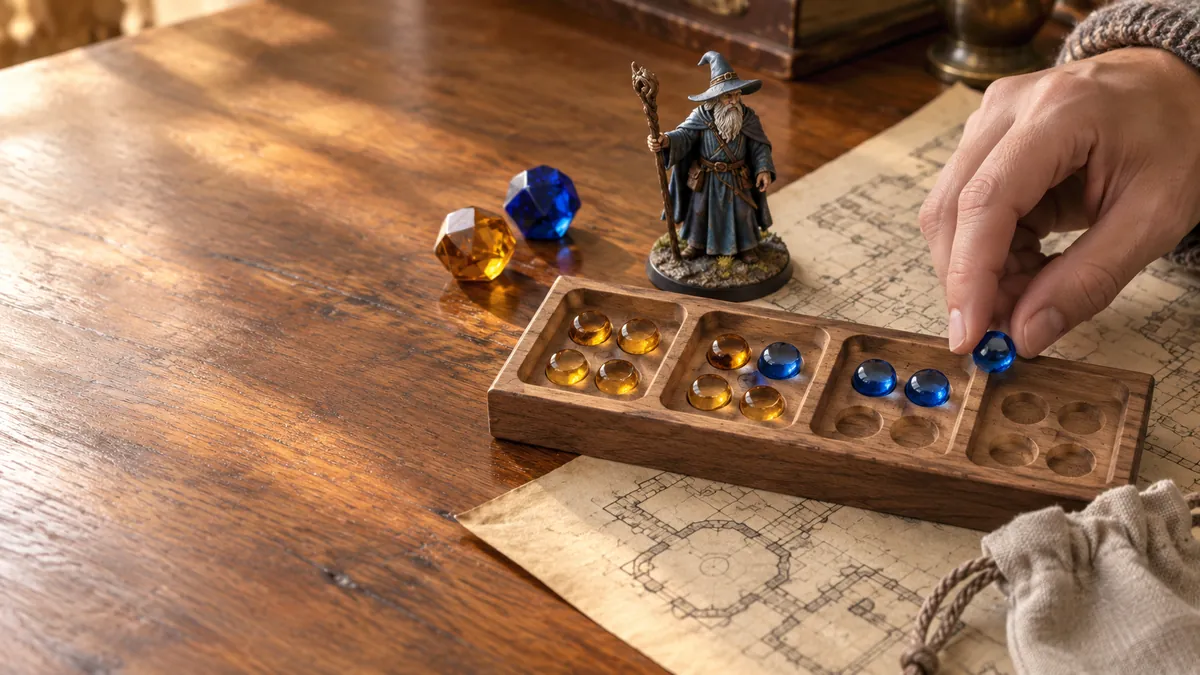
- A small tray or dish of tokens, one per slot, moved aside as you spend them. This gives you a visual budget you can glance at without doing math.
- Spell cards laid out by level, so you can physically see which level has one card left versus five. This doubles as a reminder of what you can actually cast, which helps when you're deciding whether to "spend carefully" or hold back.
If you want more ways spell cards can speed up your actual turns, not just your tracking, 5 Ways to Use Spell Cards at the Table covers that. And if physically laying out your spells by level sounds useful for this kind of budgeting, our Blank DnD Spell Cards Printable is built for exactly that: write in your known spells, sort them by level, and you've got a visual slot tracker that works alongside your sheet. There's more in the shop if you want other printable tools for your table.
Final gut check before you cast
Before you spend a slot, ask yourself one question: would I regret this choice if the next fight turned out to be worse? If the answer is yes, consider stepping down a level or switching to a cantrip. Spell slot management isn't about never casting big spells. It's about making sure the big spell is still there when the day actually needs it.
This content is for use with the D&D 5e SRD and is not affiliated with Wizards of the Coast.
Frequently asked questions
- How many spell slots should I save for emergencies?
- A good rule of thumb is to hold back one slot of your highest available level and one or two of a mid-tier level for emergencies like a surprise ambush or a failed save that needs countering. Adjust up if your DM's adventuring days run long.
- Is it bad to go nova and use all my spell slots in one fight?
- Not inherently. Going nova is a valid tactic when a fight is clearly the final one of the day or when the party needs to end a fight fast to avoid real danger. The problem is doing it by habit rather than by reading the situation.
- Do cantrips count against my spell slot budget?
- No. Cantrips don't use slots, which is exactly why they're your default action when you're not sure a fight is worth spending resources on.
- How do I know how many encounters are left in the day?
- You usually don't know for certain, so ask your DM for soft signals like travel time remaining, how rested NPCs seem, or how much of the dungeon map is left. Pacing cues from the DM are the best tool you have.
- spell slots
- player advice
- spellcasters
- dnd 5e
- resource management
Related reading
- How to Make a D&D Magic Item Feel Legendary, Not Just UsefulLearn how to make DnD magic items feel special with sensory detail, personality, and history instead of just stat bonuses.
- How to Split Loot in D&D 5e Without Party ArgumentsLearn how to split loot in dnd 5e with equal coin shares, fair magic item claims, and a simple system for tracking shared party treasure.
- How to Assign Stat Blocks to a City NPC in MinutesA fast method for picking a dnd npc stat block for city encounters, using SRD monsters as reskinned stand-ins so you never stall a scene.