July 27, 2026 · 7-min read
How Much Should You Roll Damage vs. Take the Average?
The dice feel exciting, the average feels fast — here's how to actually decide which one your table needs.
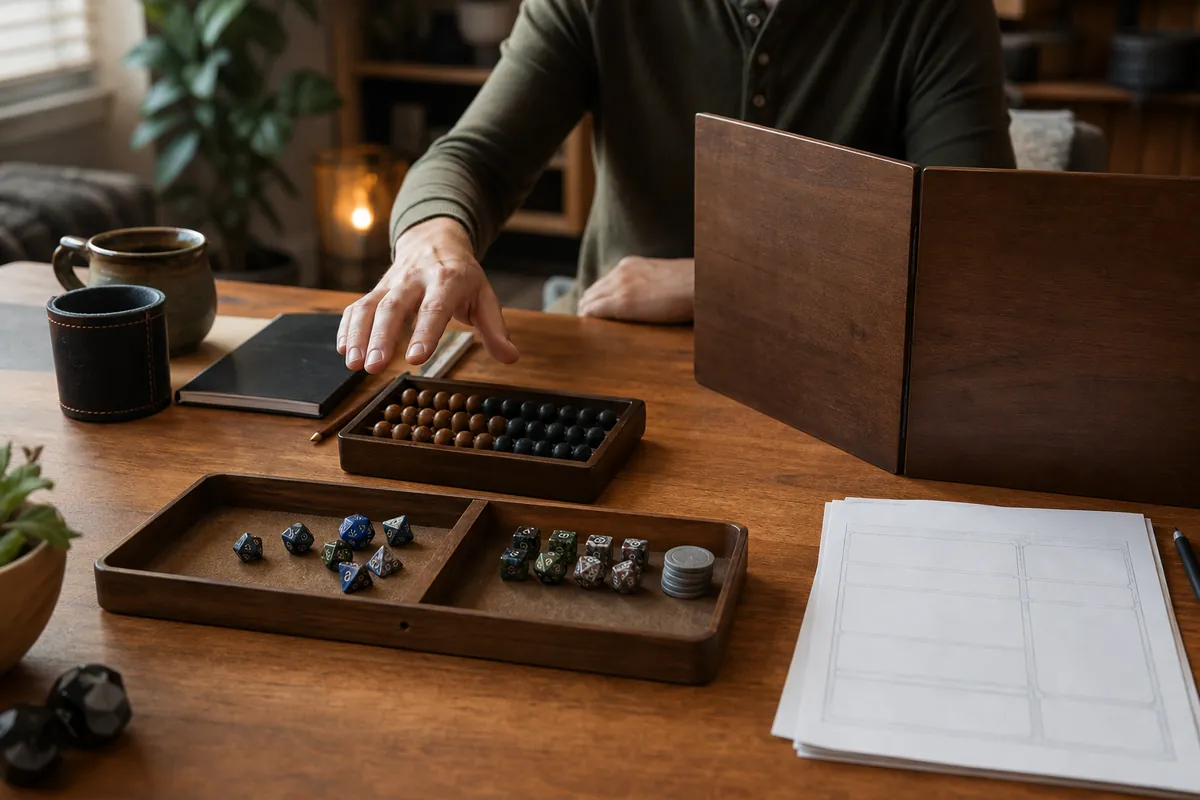
Yes, you can take the average damage instead of rolling, and it is fully within the rules of D&D 5e. Rolling gives you swingy, exciting results, while the average keeps combat fast and predictable. Which one you should use depends on who is at the table and what a given moment needs.
This comes up constantly, especially with new DMs running a monster-heavy fight for the first time, or players staring down a stat block wondering if they're "supposed to" roll. Let's clear up what the rules actually say, then get into when each approach genuinely serves your game better.
What does the rulebook actually say about this?
Every damage-dealing feature in D&D 5e lists two things: a set of dice (like 2d6) and a flat number next to it in parentheses (like 7). That flat number is the average result of those dice, rounded down. If you want to work out an average for a roll the book doesn't list, D&D Average Damage: Formula, Dice Table and Rounding gives the formula and a dice table.
Officially, you are allowed to use either one. Rolling and taking the average are both valid, RAW (rules as written) options, not a house rule you need permission for. Nobody is playing "wrong" by picking either method.
That said, most published adventures and stat blocks assume you'll roll when it matters for pacing, and lean on the average number as a shortcut for background math. Understanding the difference between those two use cases is where the real decision lives.
Do rolling and averaging actually deal the same damage?
Statistically, yes. The average damage listed for an attack is calculated directly from the dice behind it, so across dozens of attacks, rolling and averaging land on very similar totals.
The difference isn't in the math. It's in the variance:
- Rolling produces highs and lows — a goblin might hit for 1 or for 8 on the same 1d6+1 attack.
- Averaging produces the same predictable number every time — that goblin always deals 4.
Neither approach is "better" for your damage output over a full session. What changes is how spiky and memorable individual moments feel, and how much time each swing takes at the table.
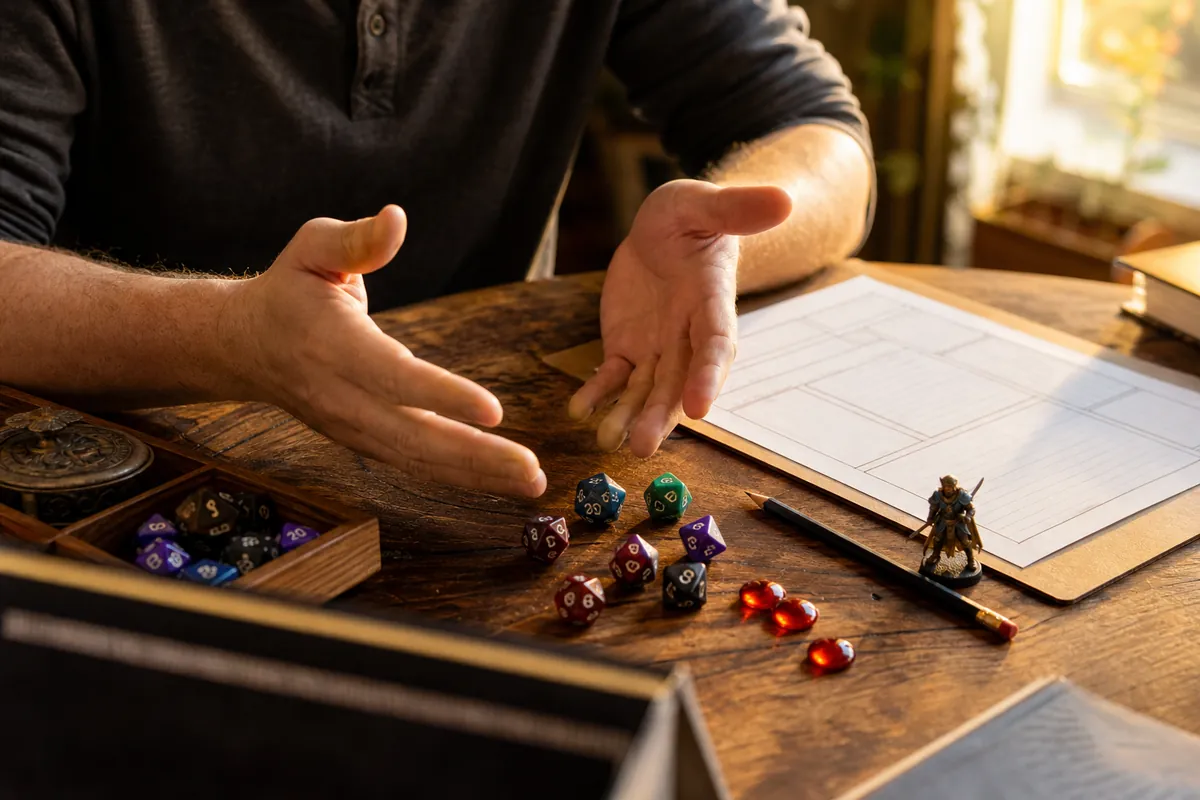
When should you actually roll the dice?
Roll when the moment benefits from tension or spectacle. A few clear cases:
- Player characters, always. Rolling their own damage is part of what makes combat feel like the players' moment. Don't take this away from them.
- Boss fights and named villains. A big crit or a brutal low roll against the BBEG creates a story your table will talk about later.
- Any attack where the swing matters for drama. If a player is at 6 hit points and a monster attacks, roll it. The uncertainty is the point.
- One-off, rare attacks. A dragon's breath weapon or a single legendary action doesn't slow anything down, so there's no real cost to rolling it.
If you want a broader look at keeping combat brisk without losing these moments, see How Long Should a D&D Turn Take? Speeding Up Combat.
When should you just use the average instead?
Take the average when speed matters more than spectacle. This is most useful for:
- Large groups of identical minions. Ten skeletons all swinging 1d6+2 each round adds up to a lot of rolling for very little dramatic payoff.
- Background or offscreen damage. Traps, environmental hazards, and NPC-vs-NPC skirmishes the party isn't directly engaged with rarely need a roll.
- Recurring low-stakes attacks. A swarm of rats nibbling at the party doesn't need suspense; it needs to resolve fast so you get back to what players actually care about.
- Long dungeon crawls with many small fights. Saving your table's rolling energy for the fights that matter keeps everyone more engaged when it counts.
A simple rule of thumb: the more identical or minor the attacker, the more it makes sense to use the flat number and move on.

Can you mix both methods in the same fight?
Yes, and most experienced DMs do exactly this without even thinking about it. A common approach:
- Roll damage for player characters and any named, dangerous monster.
- Use the average for identical minions, mobs, and background threats.
- Switch to rolling mid-fight the moment a minion becomes the last enemy standing, since that final hit deserves the tension.
This hybrid approach isn't a compromise, it's arguably the intended use of the system. The designers gave you both numbers specifically so you could choose per-situation instead of committing to one method for the whole campaign.
Does this decision change how you build encounters?
Not the math, but it does change your prep. If you know you'll be averaging damage for a swarm of low-CR monsters, you can plan those fights to run faster and add more enemies without bogging down your session. If you're rolling for everything, budget extra time per combat.
For more on getting that balance right before the dice even hit the table, see Building Your First Balanced Encounter.
What's the quickest way to decide at the table?
When you're mid-session and need a fast call, ask yourself:
- Is this a player's attack? Roll it.
- Is this monster named, unique, or currently dangerous to the party? Roll it.
- Is this one of five or more identical minions? Average it.
- Does this fight need to move faster right now? Average it.
If you're still unsure, default to rolling for anything the players will remember, and averaging for anything they won't.
Once you've settled on your own approach, it helps to have the actual numbers close at hand instead of flipping through a monster's stat block mid-fight. The DnD DM Reference Pack Printable 5e lays out damage-by-die averages and quick-reference tables so you can make the call in seconds and get back to the scene. If you're looking for other table tools, the full shop has printable sheets and reference packs built for exactly this kind of fast lookup.
Parchment & Dice is not affiliated with Wizards of the Coast. Rules content referenced here is drawn from the D&D 5e SRD.
Frequently asked questions
- Is it against the rules to always take average damage in D&D 5e?
- No. The rules explicitly offer the average as an option you can use instead of rolling, so using it every time is fully legal, not a house rule.
- Does rolling damage do more damage than taking the average over time?
- No, over many attacks the two approaches converge on the same total damage, since the average is calculated directly from the die's own probability.
- Why do most tables still roll damage instead of using the average?
- Mostly for the tactile fun of it. Picking up a fistful of dice for a big crit or a fireball is part of the appeal of the game for a lot of players.
- Should a DM roll damage for every single monster in a big fight?
- Not necessarily. Many DMs roll for named or dangerous monsters to keep the tension up, and use average damage for minions to keep the fight moving.
- dnd-5e
- rules
- dungeon-master-tips
- combat
- house-rules
Related reading
- How to Memorize a Spell List Without Flipping Pages Mid-CombatLearn how to remember spells in dnd without looking them up, using grouping, repetition, and table-ready cards instead of flipping the Player's Handbook.
- How to Run a D&D Haunted House One-Shot for HalloweenLearn how to run a DnD haunted house one shot with a simple room-by-room structure, pacing tips, and ready-to-use spooky encounter ideas.
- How to Run a D&D Skill Challenge That Feels FairLearn how to run a D&D skill challenge with clear stakes, flexible player choices, and consequences that keep the scene moving.