October 2, 2026 · 7-min read
How to Run a D&D Skill Challenge That Feels Fair
Turn a tense chase, negotiation, or escape into a shared story moment where every player has something meaningful to try.

To run a D&D skill challenge fairly, tell the players what is at stake, let them propose sensible approaches, and make every roll change the situation. A good skill challenge is not a guessing game about the one correct skill; it is a tense scene where creative choices matter as much as the dice.
Skill challenges are a useful table tool for obstacles that deserve more attention than one roll but do not need a full combat encounter. They work especially well for chases, escapes, negotiations, dangerous travel, investigations under pressure, and disasters unfolding in real time.
What is a D&D skill challenge?
A skill challenge is a structured noncombat scene where the party needs a set number of successes before reaching too many failures. Each player describes an action, chooses an appropriate ability check, and the outcome pushes the fiction forward.
For example, the party might need four successes before three failures to escape a burning archive:
- A character uses Strength (Athletics) to force open a jammed door.
- Another uses Wisdom (Perception) to find a clearer route through smoke.
- A spellcaster uses Intelligence (Arcana) to identify an unstable magical ward.
- A rogue uses Dexterity (Thieves’ Tools) to disable a locked exit.
The structure gives the scene momentum, but the story is still the important part. Do not run it as a round of players naming skills until enough numbers succeed.
When should you use a skill challenge?
Use one when the outcome is uncertain, several characters can help, and failure would create an interesting complication. If only one character’s expertise can reasonably solve the problem, a normal ability check is usually cleaner.
A skill challenge is a strong choice when:
- The party is escaping a collapsing ruin.
- They must persuade suspicious guards before reinforcements arrive.
- They are crossing hazardous terrain while protecting an injured ally.
- They are tracking a target through a crowded city.
- They need to prepare a defense before an enemy arrives.
Skip the structure when there is no meaningful pressure. A calm day of research at a library may call for a few checks, roleplay, or simply a helpful answer rather than a success-and-failure track.

How do you set fair stakes and outcomes?
Before the first player acts, explain the goal, the immediate danger, and what failure might cost. Players do not need every mechanical detail, but they should understand what their characters can see and why time matters.
Try this opening:
“The river is rising fast. You need four successes before three failures to get everyone across safely. A failure might mean lost supplies, injury, or being swept downstream—but you can still reach the far bank.”
That framing is fair because it answers the questions players need to make choices:
- What are we trying to do?
- Why can’t we take unlimited time?
- What kinds of risks are present?
- What will a bad result look like?
Decide your success target based on the scene’s importance. Three successes before three failures suits a quick obstacle. Four or five successes makes room for more players and more changing circumstances. Avoid making a challenge long just to make it difficult; long sequences can become repetitive if each roll does not introduce a new decision.
What DCs should you use?
Choose DCs from the situation, not from a desire to make players fail. A straightforward but pressured task might use DC 10. A difficult action with real danger may be DC 15. Reserve DC 20 for truly demanding ideas, poor conditions, or attempts that would impress an experienced specialist.
You can also vary DCs when the fiction supports it. Climbing a wet wall might be harder than finding handholds, while a clever plan to create a rope harness could lower the climb’s DC or grant advantage.
Fair does not mean easy. It means players can understand why a task is hard and can respond with a plan. If they bring the right gear, spend a spell slot, seek help, or use a strong idea, let that preparation matter.
How do you invite creative skill use?
Start every turn by asking what the character does, not what skill they use. Once they describe the action, decide whether a check is needed and which ability and proficiency fit.
Instead of asking, “Who wants to roll Survival?” ask:
“The trail disappears in windblown snow. What does each of you do to keep the group moving?”
This approach prevents the challenge from becoming a list of familiar skills. A bard might encourage exhausted companions with Charisma (Performance), while a ranger reads the terrain with Wisdom (Survival). Both can help, but they should solve different parts of the problem.
Let unusual suggestions work when they are grounded in the fiction. A character might use Intelligence (History) to remember old city tunnels, or Charisma (Intimidation) to make a pursuing gang hesitate. Ask one clarifying question if needed: “What exactly are you saying that makes them back down?”
If an idea cannot reasonably affect the obstacle, say so plainly and invite a different approach. That is more respectful than allowing a meaningless roll that secretly cannot help.
How can every player contribute?
Give the scene multiple moving parts. A chase can involve finding routes, moving fast, spotting hazards, creating distractions, and protecting civilians. A diplomatic challenge can involve reading motives, presenting evidence, calming tempers, and catching contradictions.
Be careful with repeated skills. You do not need a hard rule banning them, but the same check should not solve every beat of the scene. After a successful Athletics check clears fallen masonry, another Athletics check might still work if it handles a new danger, such as hauling an ally from a ledge.
Also watch for a character with a very high bonus taking every roll. Rotate the spotlight by describing new problems that suit different strengths. This is especially helpful for players whose characters are not built around common exploration skills.
For a fast refresher on the rules language you may use when consequences impose penalties, keep D&D 5e conditions explained nearby.
What should failure look like?
The best skill challenge failures move the adventure forward. “Nothing happens” is rarely tense, while “the campaign ends” can make a single bad roll feel punishing.
Use failure to introduce a cost such as:
- Lost time that lets an enemy prepare.
- Damage or expended resources.
- A separated ally, broken item, or lost clue.
- A noisy escape that creates future trouble.
- Success at the main goal, but from a worse position.
In the burning archive example, three failures might mean the party escapes but loses an important map, takes fire damage, and emerges in the wrong district. They still have choices; the story simply has sharper edges now.
Partial success is often ideal for major moments. If the party needs evidence from a guarded estate, they may get it after failures—but leave a recognizable calling card behind. That result respects their effort while giving you material for the next session.
How do you keep the scene from feeling arbitrary?
Describe the result of every roll before asking for the next action. A success should create progress the players can picture. A failure should change the terrain, raise the pressure, or reveal a consequence.
Avoid hidden requirements such as needing a particular skill or spell that you never hinted at. If the obstacle has a special vulnerability, put clues in the scene: scorched runes, a weak-looking bridge support, guards reacting nervously to a noble crest.
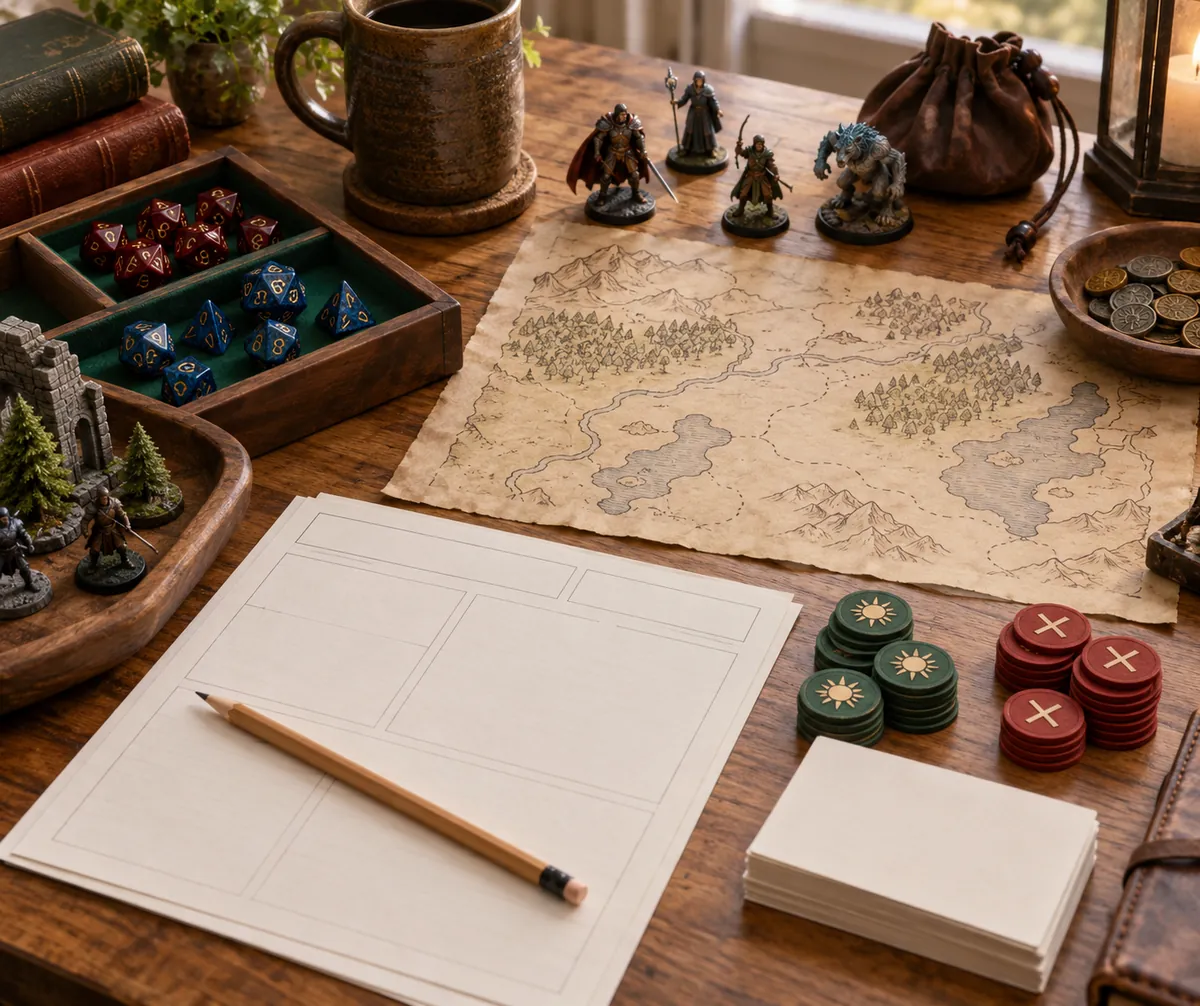
It also helps to track successes and failures openly. You can use checkmarks, tokens, or a simple note where everyone can see it. Open tracking makes the tension feel earned, and it reassures players that the goalposts are not shifting.
What is a ready-to-run example?
Here is a simple four-success-before-three-failures challenge for a city chase.
Goal: Catch a courier before they reach the docks.
Pressure: The courier is gaining distance through a busy market, and the harbor patrol may mistake the party for criminals.
Possible approaches:
- Dexterity (Acrobatics) to vault stalls and obstacles.
- Wisdom (Perception) to spot the courier in the crowd.
- Charisma (Persuasion) to convince vendors to point out the route.
- Intelligence (Investigation) to predict where the courier will emerge.
- Strength (Athletics) to force through a blocked alley.
- A spell or class feature that logically closes distance or reveals the target.
Failure consequences: A failed check can cost distance, cause a collision with a merchant, attract patrol attention, or send the courier onto a dangerous rooftop route. At three failures, the courier reaches the docks—but the party can still pursue by boat, question witnesses, or investigate the destination.
That final point matters: prepare the next lead before you begin. Fair challenge design never makes one unlucky sequence erase the adventure.
What should you keep behind the screen?
A small reference sheet makes skill challenges easier to run without pausing the momentum. Note the goal, success target, failure limit, likely DCs, a few possible complications, and what success or failure changes.
If you like having those prompts within reach, the DnD DM Reference Pack Printable 5e can be a handy table companion alongside your usual notes. You can also browse more printable tools in the shop.
Skill challenges are a flexible table technique, not a separate rules subsystem that needs perfect math. Keep the stakes visible, reward thoughtful approaches, and let both success and failure create a more interesting next scene.
Dungeons & Dragons content referenced here uses material compatible with the SRD 5.1 where relevant. This site is not affiliated with Wizards of the Coast.
Frequently asked questions
- How many successes should a D&D skill challenge need?
- Three to five successes is usually enough for a short scene. Use more only when the challenge covers a longer journey, complex plan, or major campaign moment.
- Can players use the same skill more than once?
- Yes, if they describe a genuinely different approach. Repeating the same skill and explanation should become harder or stop being useful so every character has room to contribute.
- What happens if the party fails a skill challenge?
- Failure should change the situation rather than end the game. Add a cost, lost time, damage, a complication, or a worse position for the next scene.
- Should I tell players the DC in a skill challenge?
- You can, especially when the danger is easy for characters to judge. Keeping a DC hidden also works when uncertainty is part of the scene, but always describe the risk clearly.
- dnd
- dnd-5e
- dm-advice
- skill-challenges
- encounter-design
Related reading
- How to Build a D&D NPC Generator TableBuild a D&D NPC generator table that gives you quick names, motives, mannerisms, and useful hooks during play.
- How to Make a D&D Tavern Menu Your Players Will UseLearn how to make a D&D tavern menu with clear prices, memorable dishes, and useful choices your players can use at the table.
- How Much Should You Roll Damage vs. Take the Average?Should you roll damage or take average in D&D? Here's the RAW ruling, when each option is faster, and how to choose at your table.