September 23, 2026 · 8-min read
How to Build a D&D NPC Generator Table
A few well-chosen rolls can turn an unnamed shopkeeper into someone your players remember.
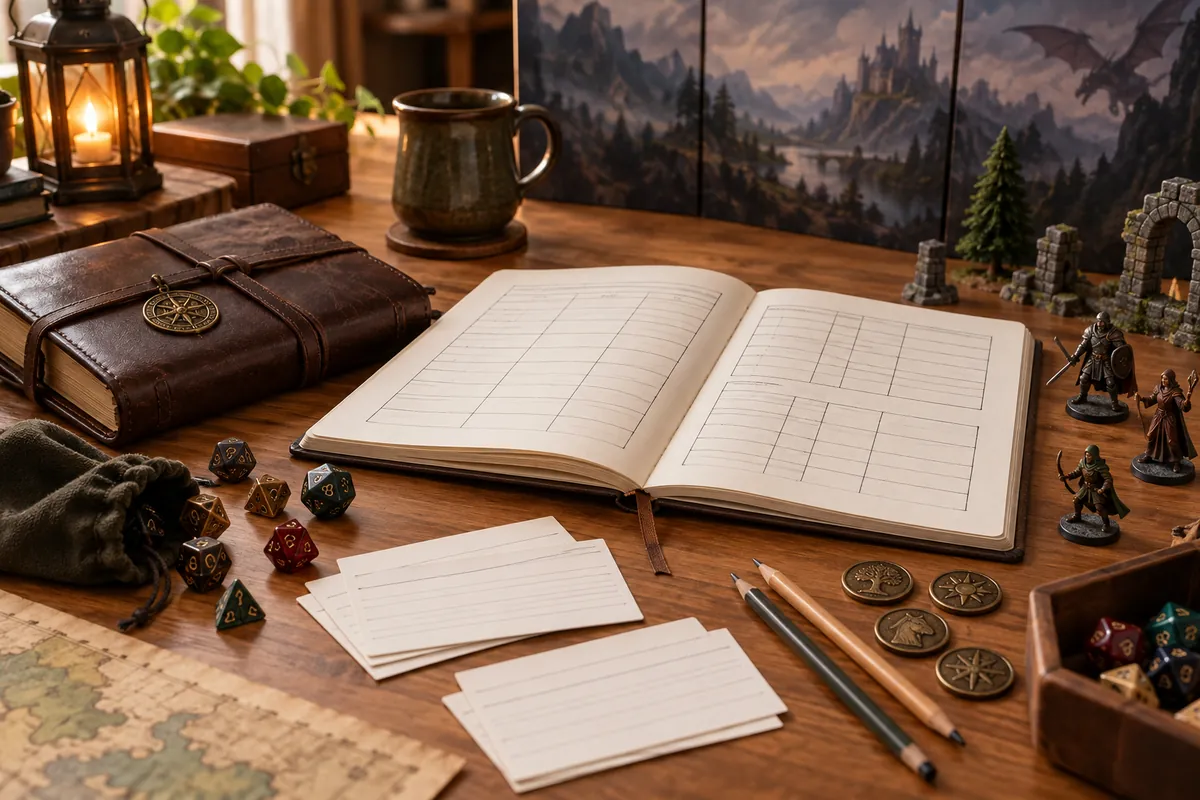
A D&D NPC generator table is a set of small random tables that gives you an NPC’s playable details in a few rolls: a role, a noticeable trait, a goal, and a hook. Build it around details you can say aloud immediately, and you will have useful people ready when the party talks to someone unexpected.
The goal is not to generate a complete biography. It is to create enough information to answer the first few player questions, make a choice in character, and decide whether this person matters after the scene ends.
What should an NPC generator table include?
Start with four categories. Each category should answer a different question your players are likely to ask.
- Role: Who is this person in the current location?
- First impression: What do the characters notice right away?
- Want: What does this NPC want today?
- Hook: What can connect them to the party or adventure?
That combination creates an NPC with an obvious presence and a usable purpose. A baker who wants more customers is fine; a baker who is quietly trying to find a missing delivery driver gives the party something to respond to.
Avoid using a table full of appearance details alone. Hair color, height, and clothing can help you picture someone, but they do not tell you how that person behaves when the rogue asks an awkward question.
A good table gives you decisions, not just decoration.
How do you choose the right dice size?
Choose the dice size based on how quickly you need the table to work. A d6 is ideal for a single handwritten page and fast table use. A d10 or d20 gives more variety, but can slow you down if every result needs rereading.
For most DMs, a d6 table is the best place to begin:
- It fits comfortably on an index card or one section of a DM binder.
- You can roll ordinary dice already on the table.
- Six strong options are easier to write than twenty vague ones.
- You can reroll duplicates without losing momentum.
You do not need every category to use the same die. A d6 for occupation, d8 for mannerisms, and d10 for rumors is perfectly workable. Just label each table clearly so you do not pause to remember what to roll.
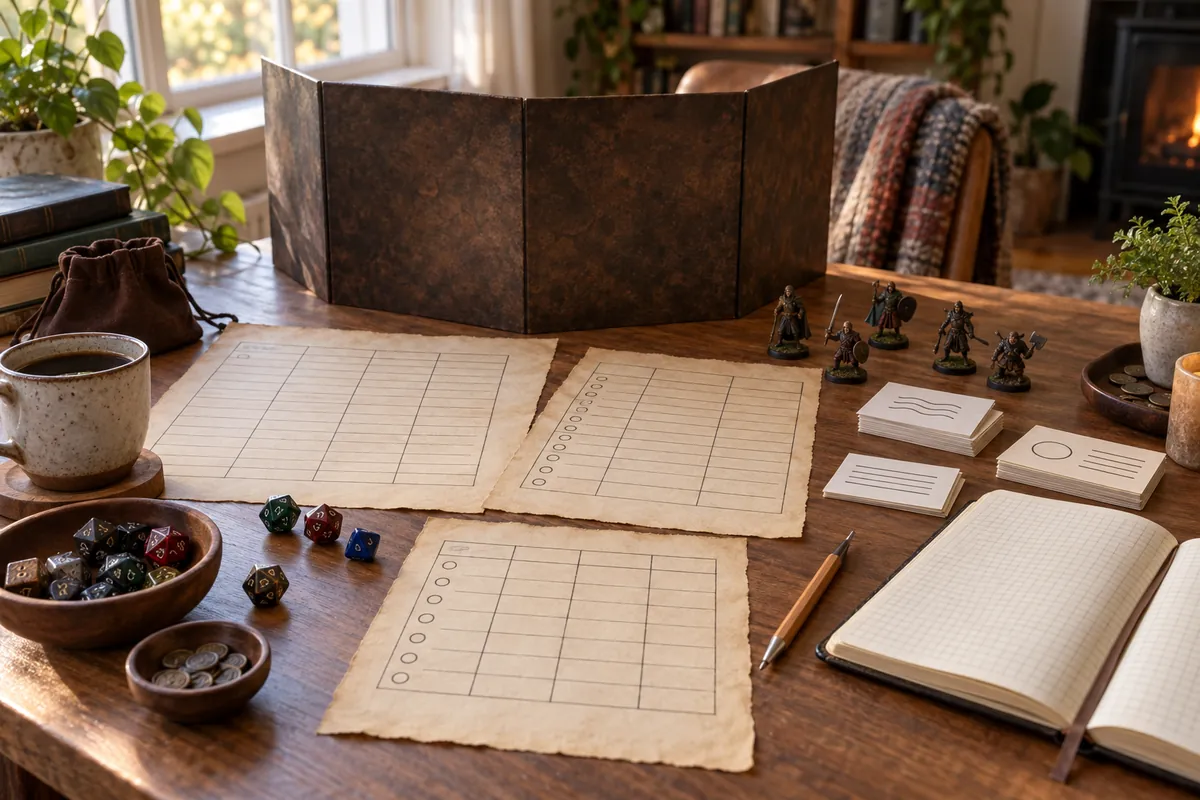
How do you make results useful in play?
Write entries that invite an action. The best random NPC traits give you a clear way to roleplay, rather than a fact to file away.
Compare these first-impression entries:
- Wears a blue coat
- Speaks too quietly
- Keeps checking the door
- Corrects everyone’s wording
- Laughs at the wrong moment
- Refuses to sit down
The first can be visual flavor. The others affect the conversation right now.
Use the same test for NPC goals. Rather than writing “wants money,” make the desire specific enough to drive a response:
- Needs coin before sunset to keep a family business open
- Wants a local rival blamed for a mistake
- Hopes to leave town before a visitor arrives
- Wants the party to endorse them publicly
- Needs a dangerous package delivered discreetly
- Wants proof that an old story is true
Specific does not mean complicated. You should be able to read an entry once and know what the NPC is likely to say, avoid, offer, or ask for.
What is a simple NPC table example?
Here is a practical d6 D&D NPC generator table you can copy into your notes. Roll once on each list, then connect the results in the simplest way that makes sense.
d6: Current role
- Shopkeeper or vendor
- Guard, scout, or local watch member
- Traveler delayed in town
- Craftsperson finishing urgent work
- Inn worker or tavern regular
- Messenger carrying news
d6: First impression
- Speaks with intense confidence
- Keeps glancing toward an exit
- Is unusually formal with strangers
- Talks quickly when nervous
- Has an opinion about everything nearby
- Pauses before answering simple questions
d6: Immediate want
- Needs help finding a missing person
- Wants to avoid being recognized
- Needs someone to verify a suspicious claim
- Wants a rival embarrassed, not harmed
- Is trying to sell or hide an inconvenient item
- Wants protection until morning
d6: Adventure connection
- Saw someone leave a place they should not have been
- Knows a shortcut with a serious risk
- Has a partial map, letter, or description
- Owes a favor to the wrong person
- Heard a rumor that is mostly true
- Is connected to someone the party already knows
Suppose you roll: messenger, unusually formal, wants to avoid being recognized, and has a partial map. You now have a messenger who carefully addresses the party as honored travelers, hides their face whenever someone enters, and carries a torn map they do not want searched.
That is enough to run a scene. You can decide the map’s destination only if the characters pursue it.
How do you connect the rolls quickly?
Do not treat random results as a puzzle you must solve perfectly. Pick the first logical connection and state it with confidence.
A quick formula helps:
Role + trait + want + connection = first line of dialogue
For example:
- Guard + talks quickly + needs protection + saw someone leave: “You did not hear this from me, but I saw someone climb out of the old storehouse, and I would rather not be on duty when they return.”
- Vendor + formal + wants a rival embarrassed + true rumor: “If you have business with the magistrate, perhaps you should know what their favorite clerk has been saying after dark.”
- Traveler + checks the door + needs a claim verified + partial map: “You look capable. Tell me whether this route is real, because I am being followed and I cannot afford a wrong turn.”
This approach keeps the NPC rooted in the present scene. It also prevents a common prep trap: spending twenty minutes inventing childhood history for a person who may only appear for thirty seconds.
If you want to strengthen your on-the-fly scenes, How to Read a Room: Improvising When Players Go Off-Script pairs well with this method.
Which details should you save for later?
After the session, only promote an NPC to your campaign notes if the players remember them, return to them, or change their plans because of them. Until then, a single line is enough.
A useful short record looks like this:
- Name: Mara Venn
- Role: Harbor messenger
- Voice or mannerism: Speaks too formally
- Want: Avoid recognition
- Connection: Carries a partial map
- Status: Promised the party more information tomorrow
Add a relationship note when it happens: trusts the cleric, fears the captain, owes the wizard a favor. Those evolving connections matter more than an elaborate list of physical features.
For NPCs who might join combat or become recurring rivals, use a simple stat approach. A familiar creature or NPC-style stat block can be adapted from SRD 5.1 material, then adjusted only as much as your game needs. Keep combat details separate from your roleplay prompt so you can find either quickly.
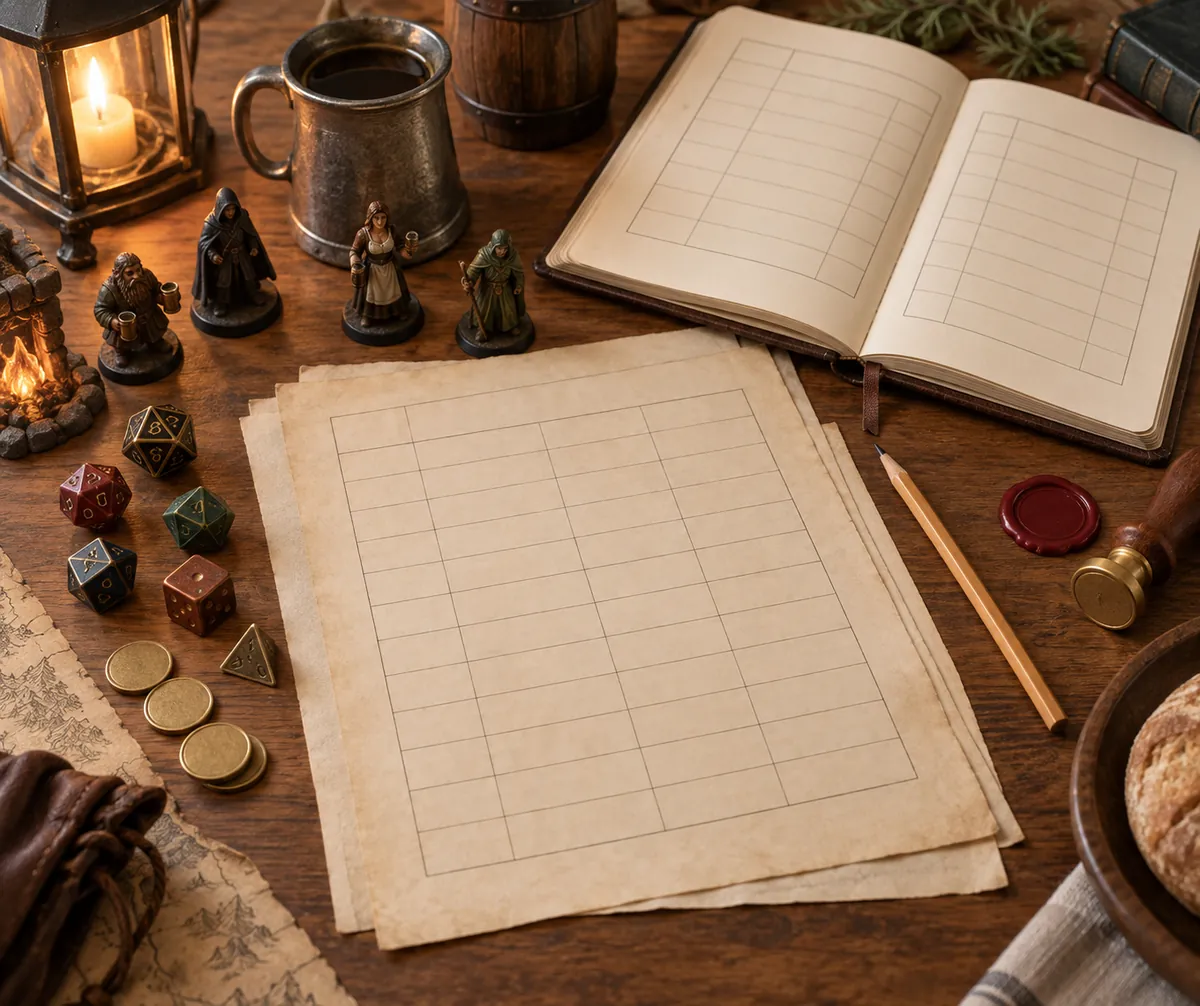
How can you tailor tables to a location?
Your core categories can stay the same throughout a campaign. Change the entries that reflect where the party is.
In a city market, use roles such as vendors, porters, inspectors, musicians, and couriers. In a remote mountain village, use hunters, guides, herders, shrine keepers, and travelers sheltering from weather.
You can also make a small local rumor table. Keep each rumor short and decide privately whether it is true, false, incomplete, or true in an unexpected way.
- A bell rings beneath the hill after midnight.
- The reeve has not slept in their own home for a week.
- Someone is paying for old maps with silver, not coin.
- The river has been flowing the wrong direction at dawn.
- A familiar face has been seen in two places at once.
- The abandoned tower has a light in its highest window.
These results give your NPCs something to know, misunderstand, or repeat. They are also easy to tie into the next encounter. If the rumor leads toward danger, Building Your First Balanced Encounter can help you prepare the scene without making it overwhelming.
How do you keep NPCs from feeling repetitive?
Use a few simple rules when you roll.
- Roll only when you need uncertainty; choose a result when the scene calls for it.
- Reroll any combination that repeats a recent NPC too closely.
- Let an NPC’s reaction change after the party acts.
- Give recurring NPCs one new detail each time they return.
- Keep one blank result in a larger table for an idea inspired by the current session.
Most importantly, do not make every NPC suspicious, tragic, or secretly powerful. A dependable innkeeper, a distracted guard, or a cheerful vendor can make the setting feel lived-in. Their ordinary concerns also make the dangerous and mysterious NPCs stand out.
What should you keep at the table?
Keep your generator in a format you can scan without breaking eye contact with the group. One page with four labeled tables is usually enough. If you use digital notes, put the generator near your session outline rather than buried in a worldbuilding folder.
A reusable card format is especially handy for NPCs who return. As a quiet prep aid, these blank printable NPC reference cards give you space for the same fast details: name, role, goal, mannerism, and notes from play. You can browse more table-ready resources in the Parchment and Dice shop.
The best D&D NPC generator table is the one you will actually roll on when the players ask, “Who is standing behind the counter?” Give yourself a role, a visible behavior, a want, and a connection—and let the conversation reveal the rest.
This article uses D&D 5e terminology compatible with SRD 5.1 and is not affiliated with Wizards of the Coast.
Frequently asked questions
- How many entries should an NPC generator table have?
- Six entries work well for a quick d6 table, while ten or twenty entries add variety without becoming difficult to use at the table.
- What makes a random NPC feel believable?
- Give them one immediate trait, one desire, and one reason to care about the current situation. You only need more detail if the players keep engaging with them.
- Should every NPC have a secret?
- No. A mix is more believable and easier to run. Give secrets to NPCs who need tension, leverage, or a future connection to the adventure.
- Can I reuse the same NPC generator table?
- Yes. Reuse the structure, then swap a few setting-specific options such as occupations, rumors, and locations to keep results fresh.
- dnd
- dnd 5e
- npc generator
- dm tools
- tabletop rpg
Related reading
- How to Make a D&D Tavern Menu Your Players Will UseLearn how to make a D&D tavern menu with clear prices, memorable dishes, and useful choices your players can use at the table.
- How to Run a Bar Brawl Encounter Without It Getting SillyClear dnd bar brawl encounter rules for running a tavern fight that stays fun and nonlethal instead of spiraling into a real fight.
- How to Calculate Passive Perception for D&D Monsters and NPCsLearn how to calculate passive perception in D&D 5e for any monster or NPC, plus how to use it to run ambushes and stealth checks fairly.