September 22, 2026 · 7-min read
How to Make a D&D Tavern Menu Your Players Will Use
A good tavern menu turns a quick stop for ale into a place your players remember.
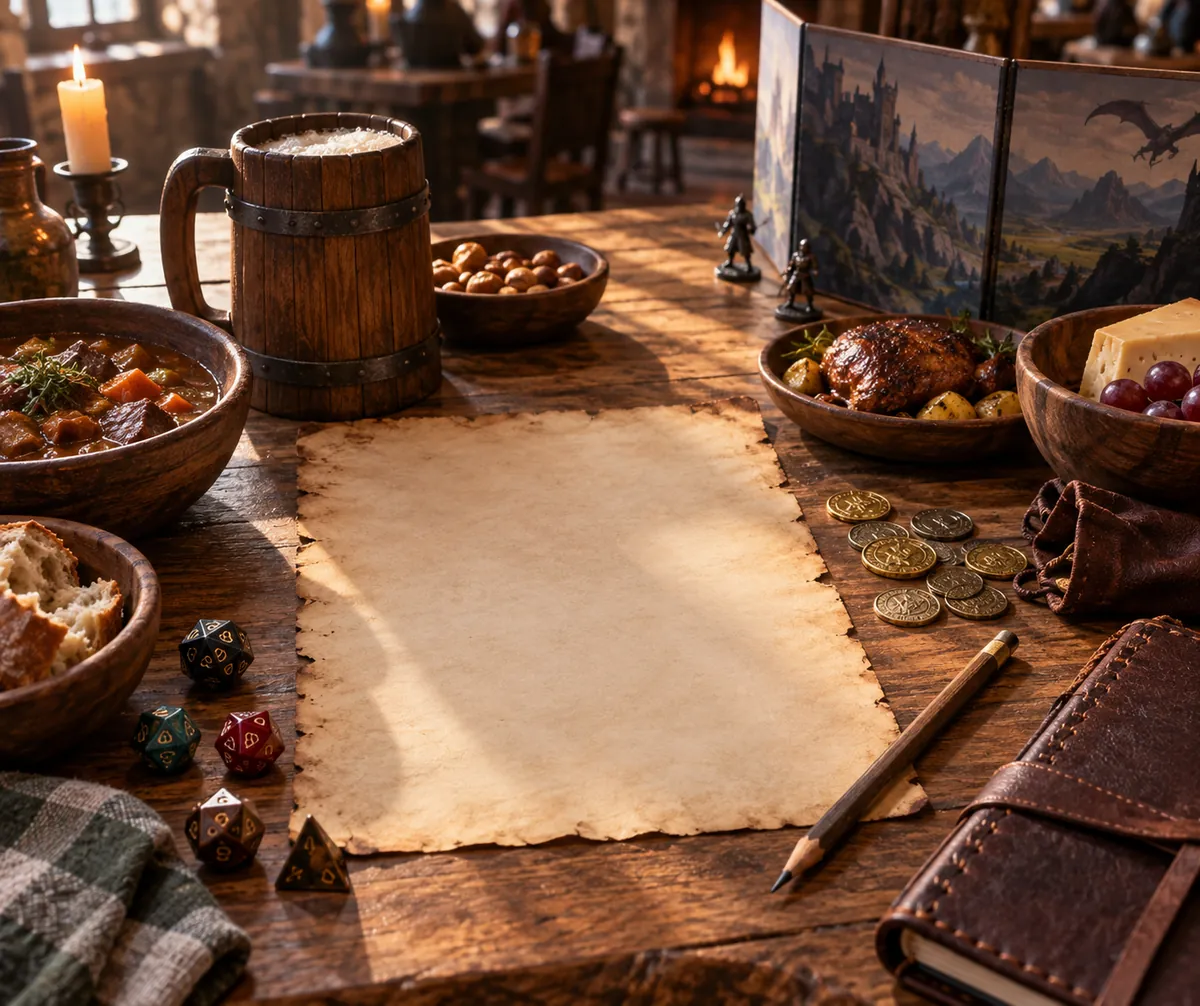
To make a D&D tavern menu your players will use, keep it short, readable, and tied to a decision they can make at the table: what to eat, drink, spend, or ask about. Start with familiar categories, add a handful of flavorful names, and make every price easy to scan.
A tavern menu does not need to be a historical document or a page of fantasy poetry. Its job is to give the party a prop that invites conversation and makes the tavern feel like a real stop on the road.
What should a D&D tavern menu include?
The most useful menu has three things: recognizable options, clear prices, and one or two details worth asking the innkeeper about. Players should understand what they are ordering even if the name is fantastical.
A reliable starting structure is:
- 2 to 3 drinks, including an inexpensive house option
- 2 to 3 simple meals or snacks
- 1 filling house meal
- 1 specialty item tied to the town, owner, or current story
- Optional lodging information if this is also an inn
For example, a small roadside tavern might offer:
- Small ale — 4 cp
- Cider mug — 5 cp
- Spiced wine — 2 sp
- Brown bread, cheese, and onion — 6 cp
- Stew bowl with bread — 1 sp
- Roast chicken plate — 5 sp
- The Copper Kettle's peppered eel pie — 8 sp
That last item gives the players something to react to. One character may order it immediately. Another may ask where the eels come from. Suddenly, you have a natural opening to introduce local marshes, a fishing dispute, or an NPC who insists the pie used to be better.
How do you choose tavern menu prices?
Use prices that support play, not prices that force you into accounting. A tavern visit is usually a small roleplaying scene, so the party should be able to buy ordinary food and drink without turning it into a budget meeting.
A simple approach is to sort items into four bands:
- Cheap: water, weak ale, bread, porridge, pickled vegetables.
- Ordinary: a mug of local drink, soup, stew, cheese, a basic meal.
- Comfortable: wine, meat plates, a good dessert, a shared platter.
- Special: rare imports, a feast, a famous recipe, a private table, or a meal prepared for an honored guest.
Then adjust the whole menu based on the tavern. A struggling fishing village may have cheap chowder and expensive wine. A wealthy trade city may charge more for everything but offer imported ingredients. A frontier outpost may sell filling meals at fair prices because travelers need them alive.
Do not worry if every number is not perfectly realistic. Consistency matters more. If a hearty meal is inexpensive at one working-class tavern, make the expensive option feel meaningfully different: better ingredients, a better location, a local reputation, or an attached service.
How can food reveal the setting?
A tavern menu is a quiet piece of worldbuilding because it answers a practical question: what grows, travels, or survives here? You only need a few clues.
Think about the settlement before naming dishes:
- Coastal town: smoked fish, shellfish chowder, salted pork, seaweed bread.
- Forest village: berry cider, mushroom stew, venison, herb-roasted roots.
- Mountain hold: dark beer, goat cheese, barley porridge, preserved meats.
- Desert trade stop: flatbread, dates, spiced tea, lentil dishes, dried fruit.
- Large city: imported wine, pastries, regional specialties, fashionable cocktails.
Choose one local ingredient and repeat it lightly. A town known for apples might have cider, apple cakes, and pork with apple glaze. That repetition makes the place feel intentional without requiring a long speech from the DM.
You can also let shortages tell a story. If the menu has no fresh meat, the road may be unsafe. If the innkeeper apologizes for watered ale, a supply wagon may be late. If everyone orders a cheap beet soup, perhaps the local lord raised grain taxes.
What makes players actually read the menu?
The answer is usability. A menu that looks impressive but takes two minutes to decode will often stay on the table untouched. Keep names evocative, then add a plain description where needed.
Instead of writing only Dragon's Breath, write:
- Dragon's Breath — hot mulled cider with clove and red pepper — 2 sp
Instead of writing only The Sailor's Regret, write:
- The Sailor's Regret — dark rum, citrus, and questionable green syrup — 3 sp
That format gives the players the joke and the information at once. It also makes it easier for you to answer follow-up questions without improvising every ingredient.
A few table-ready design choices help:
- Use large category labels such as Drinks, Meals, and Lodging.
- Keep each item to one line where possible.
- Put prices in a consistent place.
- Avoid more than one unfamiliar fantasy word per item.
- Include a house specialty with a small note from the proprietor.
- Leave room for a handwritten daily special or crossed-out item.
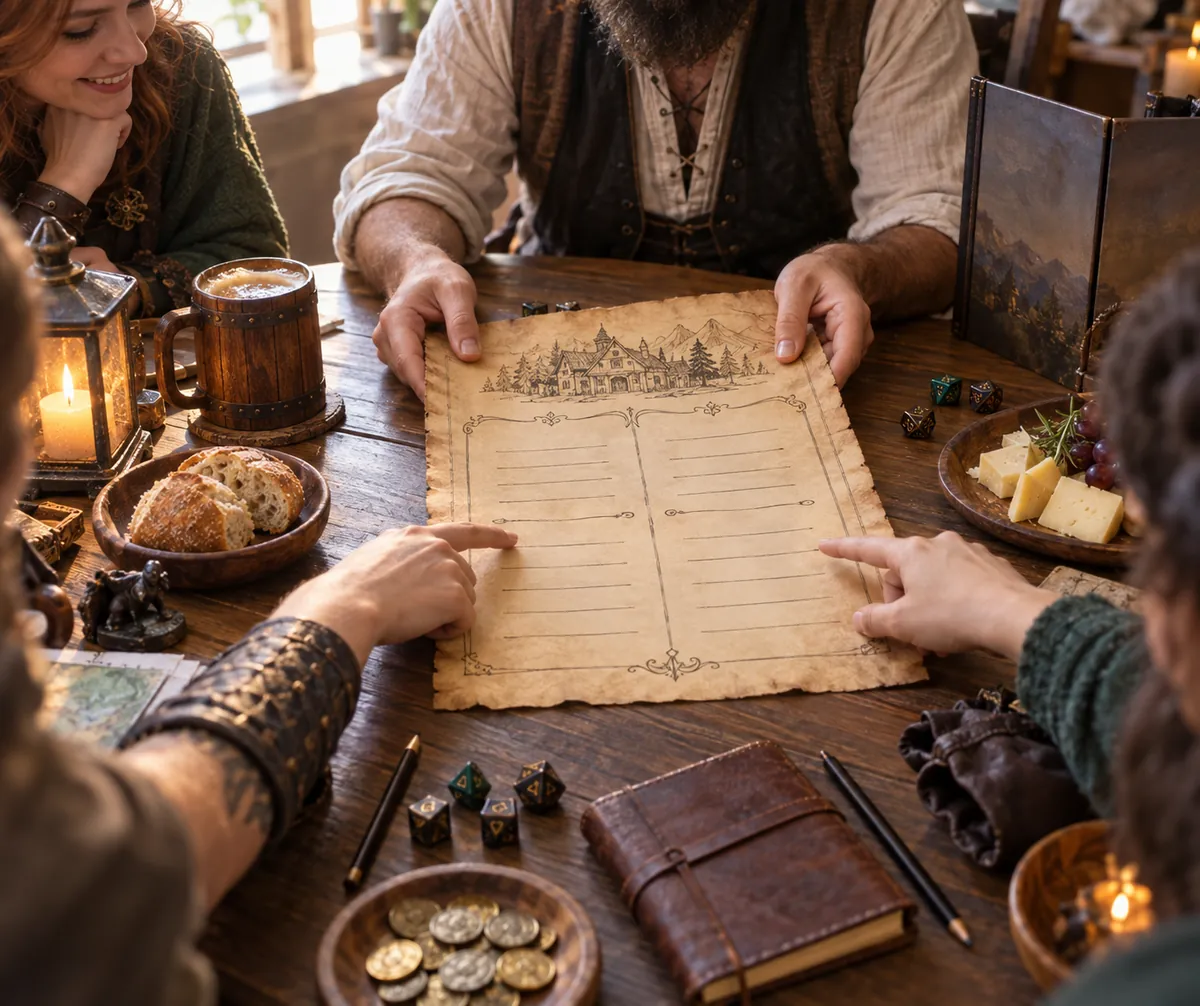
If you are handing out a physical menu, print it on one page. If you are running online, paste the same short list into chat or show it as an image. The players should be able to choose while still listening to the scene.
How do you add hooks without forcing them?
The best tavern menu hooks are optional. They reward curiosity, but they do not require the party to interrogate every line item.
Try adding one short note beside a menu item:
- Mooncap mushroom stew — only when Old Mara finds them — 3 sp
- Golden pear cordial — last bottle until the caravan returns — 1 gp
- Blackstone sausage — ask no questions — 8 cp
- Captain Rell's breakfast — served after sunset — 2 sp
Each note can lead somewhere if the players bite. Old Mara may be missing in the woods. The caravan may have been attacked. Captain Rell may be a local ghost, a retired smuggler, or simply a cook with an odd schedule.
Keep the menu from becoming a quest board. One or two hooks are plenty. The rest should establish normal life, because normal life makes the strange parts stand out.
Can you make one menu work for any tavern?
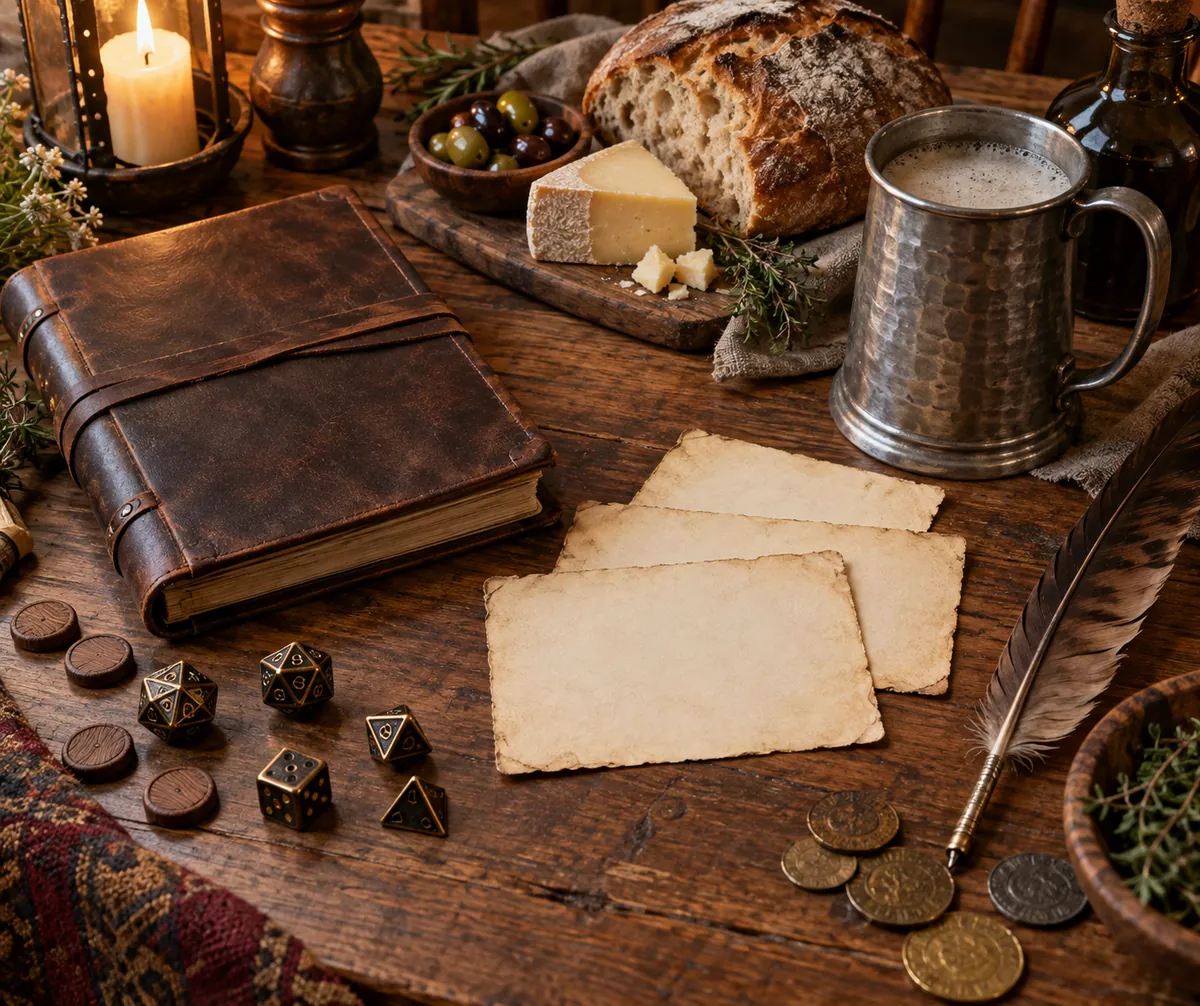
Yes. Build a reusable base menu, then change three details for each location: the tavern name, the local ingredient, and the specialty. This saves prep while keeping every stop distinct.
Here is a quick template:
Drinks
- House ale — 4 cp
- Local cider or wine — 8 cp
- Spiced specialty drink — 2 sp
Meals
- Bread, cheese, and seasonal fruit — 6 cp
- Soup or stew with bread — 1 sp
- Roast or filling plate — 5 sp
House specialty
- [Tavern name] special: [local ingredient] served with [memorable detail] — [price]
For a port town, that specialty might become smoked mussels with lemon butter. In a farming village, it could be honey-glazed ham with rye bread. In a spooky roadside inn, perhaps it is a midnight breakfast of black pudding, fried eggs, and coffee dark enough to stain a spoon.
This same method works especially well when your party travels frequently. Prepare three menu shells—poor, ordinary, and upscale—then reskin them as needed.
How should you introduce the menu at the table?
Do not announce every item aloud unless the players ask. Set the scene in one or two sentences, offer the menu, then move naturally into character interaction.
You might say:
The common room smells of woodsmoke and onion stew. The server places a stained menu on the table, with a star beside the house eel pie.
That gives the menu context and quietly points to one interesting choice. If nobody engages with it, no problem; you have lost nothing. If someone asks about the star, the tavern scene has found its first thread.
Taverns can also become useful pacing tools. After a difficult encounter, a warm meal gives characters space to talk. Before a dangerous job, the menu helps you introduce a rumor, rival, or employer without making the conversation feel like a briefing. For more ways to handle those unscripted player choices, see How to Read a Room: Improvising When Players Go Off-Script.
What should you prepare before game night?
Use this final checklist:
- Pick the tavern's social level: rough, ordinary, comfortable, or elite.
- Write 6 to 10 menu items.
- Give each item a clear price.
- Add one local ingredient.
- Add one house specialty.
- Decide whether lodging is available.
- Add one optional rumor or question-worthy detail.
- Keep a copy where players can see it.
If you want a ready-made handout rather than another prep task, a DnD Tavern Menu Printable can give the party a polished menu to pass around and annotate. You can also browse the wider collection of table-ready D&D printables for tools that keep small scenes moving.
A tavern menu is not about making players order lunch correctly. It is a compact invitation to roleplay: a clue about the town, a reason to speak with the server, and a small choice that makes the campaign world feel lived in.
Dungeons & Dragons and D&D are trademarks of Wizards of the Coast. This site is not affiliated with Wizards of the Coast.
Frequently asked questions
- How much should food cost in a D&D tavern?
- Keep everyday food and drink affordable enough that characters can order without a long debate. Use higher prices for imported wine, rare ingredients, private rooms, or options that reveal the tavern's status.
- dnd
- dungeon master
- tavern
- dm prep
- roleplaying
Related reading
- How to Run a Bar Brawl Encounter Without It Getting SillyClear dnd bar brawl encounter rules for running a tavern fight that stays fun and nonlethal instead of spiraling into a real fight.
- How to Write a Villain Your Players Will Love to HateLearn how to write a good DND villain with real motivation, memorable traits, and stakes your table will actually feel.
- How to Read Aloud Boxed Text Without Losing the RoomLearn how to read boxed text in D&D so players stay locked in: pacing, delivery, and when to paraphrase instead of reading word for word.