October 23, 2026 · 7-min read
How to Memorize a Spell List Without Flipping Pages Mid-Combat
The fastest casters at the table aren't the ones who studied hardest. They're the ones who stopped needing the book.
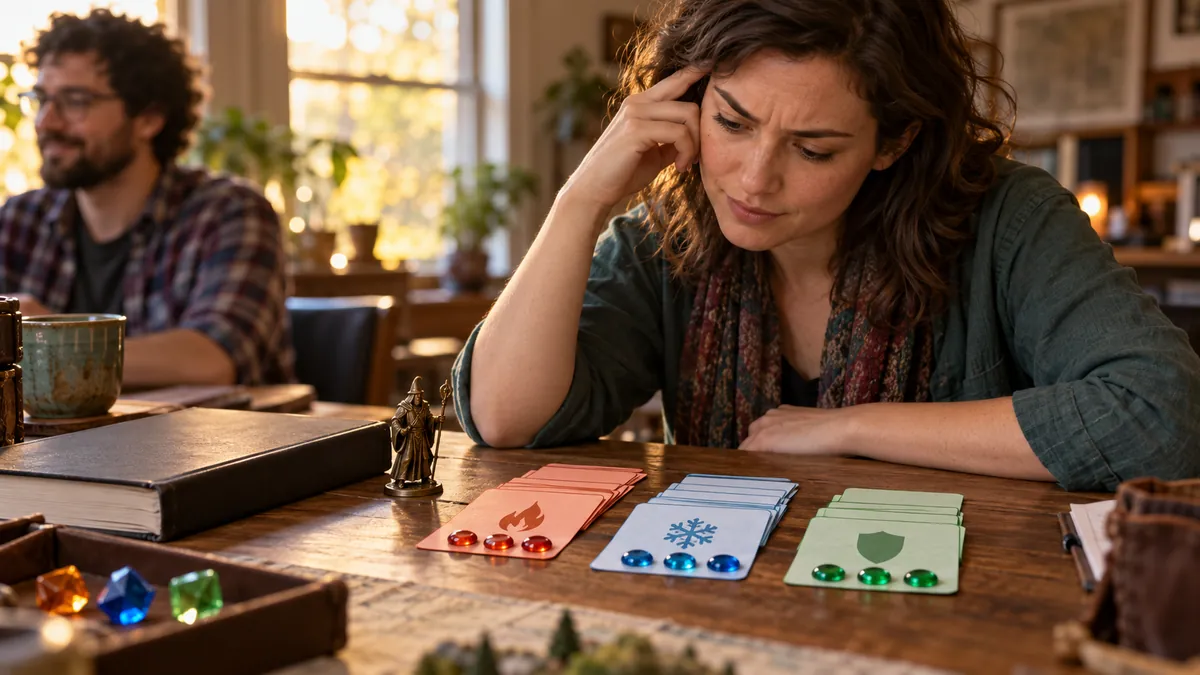
If you want to remember spells in D&D without looking them up, stop trying to memorize spell text and start memorizing decisions. Sort your spells by what problem they solve, rehearse the two or three you cast most, and keep a simple card or cheat sheet in hand so recall is a glance, not a search.
That's the short version. Here's the system that actually makes it stick.
Why do I always forget what my spells do?
You're not forgetting. You're trying to retrieve the wrong kind of information at the worst possible time.
Spell names are weak memory hooks. "Scorching Ray" tells you almost nothing about range, damage dice, or when it's the right call. Your brain has to chain through the name, then the mechanics, then the decision — three steps, every single turn.
The fix is to flip that order. Decide first ("I need to hit something far away and I have a third-level slot"), then let the spell name follow. That's a one-step lookup instead of three, and it's the whole reason grouping by purpose works better than memorizing alphabetically or by level.
How do I organize spells so I stop flipping pages?
Forget the Player's Handbook order. Build your own list sorted by what each spell actually does for you at the table.
Try these five buckets:
- Single-target damage — your go-to when one enemy needs to go down
- Area damage — for clustered enemies or when you want to end a fight fast
- Defense and escape — shields, teleports, anything that saves your skin
- Utility and exploration — the stuff you cast outside combat, between fights
- Support and buffs — anything that helps an ally more than it hurts an enemy
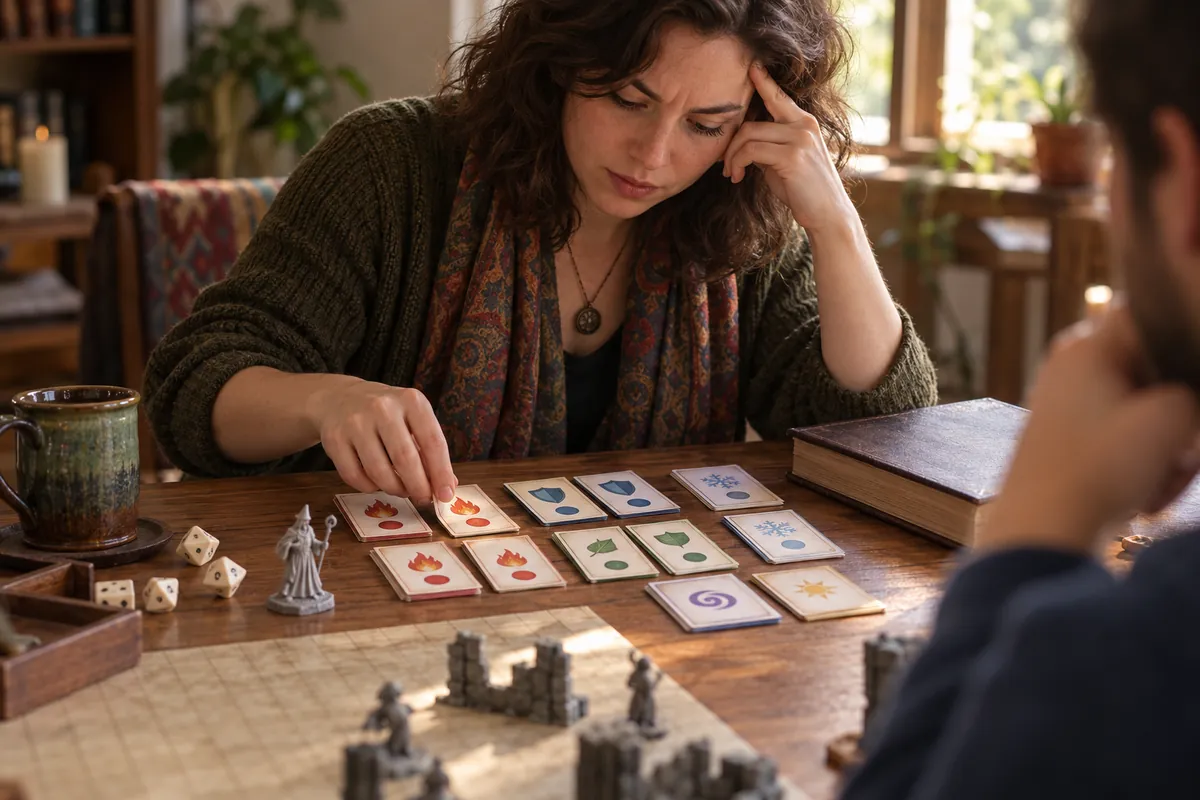
Write (or print) your spell list in these categories instead of by level. When a fight starts, you're scanning one short list of "damage" options, not your entire spellbook.
What should a spell cheat sheet include?
Keep it tight. A cheat sheet that's as long as a spell description defeats the purpose.
For each spell, write down only:
- Name and level — so you know which slot it costs
- Range and casting time — the two things that decide if it's even legal this turn
- The one-line effect — damage dice or save type, nothing else
- A trigger phrase — the situation where you'd actually cast it, like "enemy within 60 feet, no cover"
That trigger phrase is the part most players skip, and it's the part that saves the most time. "I use this when the enemy is far away and alone" is something you can match against the battlefield in two seconds. A full spell description is not.
How do I turn memorization into muscle memory?
Repetition under low stakes beats cramming under high stakes. You don't learn spells by rereading them once before a session — you learn them by using the same three or four spells over and over until naming them is automatic.
A few ways to build that habit outside of combat:
- Narrate your top three spells out loud before each session. Thirty seconds, every time. Say what they do and when you'd use them.
- Pick a "default" spell for easy fights. If you always cast the same thing against a lone goblin, that repetition locks it in faster than studying ever will.
- Rehearse the math, not just the name. Know your damage dice and save DC cold, so you're not doing arithmetic and recall at the same time.
- Review after the session, not before. Right after combat, while the moment's fresh, jot down which spell you reached for and whether it worked. That feedback loop teaches you faster than pre-reading.
This is the same principle behind how to divide spell slots across a long rest D&D day — the less you're calculating from scratch at the table, the faster and sharper your turns get.
What should I do differently for prepared casters?
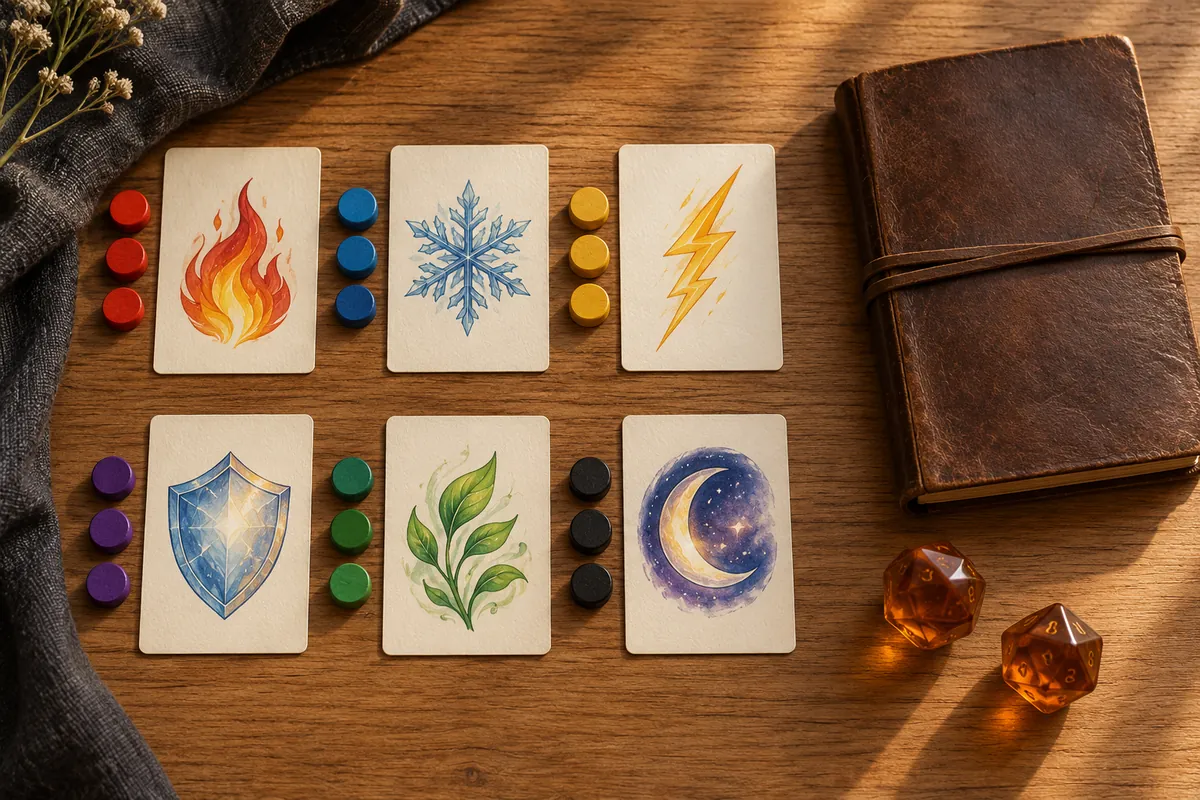
Prepared casters (clerics, druids, wizards, paladins) have it slightly harder, because your available list changes every day. The fix is to build your habits around your "core four," not your full prepared list.
Before you finalize your prepared spells for the day:
- Pick one reliable damage option
- Pick one defensive or escape option
- Pick one utility spell for whatever you expect that session (travel, social, exploration)
- Leave one slot flexible, and only look that one up if you need it
Three of your four picks should be spells you already know cold. That means on any given day, you're only genuinely "new" on one spell, not your whole list.
How do spell cards speed up combat specifically?
Cards work because they turn "search through a book" into "flip through six things." When a fight starts, you're not scanning a two-column page of dense text, you're thumbing a small stack that's already sorted the way you think.
Lay your cards out by category before the session starts (damage, defense, utility), and during combat you're pulling from a pile of maybe three, not a spellbook of twenty. That's the same logic behind how to track initiative without slowing down combat — anything that turns a search into a glance keeps the table moving.
If you want the mechanics of a spell's entry explained plainly first, it's worth reading how to read a spell description in D&D 5e before you start building your own shorthand version.
Where do I get spell cards if I don't want to make my own?
Making your own cards works, but it takes an evening you might not have before your next session. If you'd rather skip straight to table-ready cards, the DnD Spell Card Bundle — Eight Class Decks covers every core class with the range, duration, and effect laid out so you can sort and flip instead of flip and search. It's one less thing to build from scratch before game night.
You can browse the rest of the printable sheets and decks over in the shop if you're setting up a full player kit rather than just spell reference.
This content is built on the SRD 5.1 and is not affiliated with Wizards of the Coast.
Frequently asked questions
- Why can't I remember my spells during combat?
- You're trying to recall text, not a decision. Spell names are hard to retrieve under pressure, but 'what do I do when an enemy is adjacent' is a question your brain answers much faster once you've practiced it a few times.
- How many spells should I actually memorize in detail?
- Just the ones you use often: your one or two reliable damage spells, your main defensive option, and whatever you cast every single fight. Everything else can stay on a card or sheet without slowing you down.
- Do spell cards actually help, or are they a gimmick?
- They help because they turn a search problem into a sort problem. Flipping through a book means scanning paragraphs; flipping through cards means scanning a stack you've already organized by use case.
- What if my DM doesn't allow outside references at the table?
- Most DMs are fine with cards or sheets that just restate your own character's spells, since that's materially faster than everyone watching you thumb through the Player's Handbook. Ask before the session, not mid-fight.
- Is it bad to ask the DM to remind me what a spell does?
- No, but it costs time every table doesn't have infinitely. Use it as a backup, not your main system, and you'll need it less the more your prep carries the load.
- player tips
- spellcasting
- dnd 5e
- combat
- spell cards
Related reading
- How to Divide Spell Slots Across a Long Rest D&D DayLearn how to manage spell slots in D&D by budgeting them across an adventuring day instead of spending them all in the first fight.
- How to Make a D&D Magic Item Feel Legendary, Not Just UsefulLearn how to make DnD magic items feel special with sensory detail, personality, and history instead of just stat bonuses.
- How to Split Loot in D&D 5e Without Party ArgumentsLearn how to split loot in dnd 5e with equal coin shares, fair magic item claims, and a simple system for tracking shared party treasure.