October 21, 2026 · 9-min read
How to Run a D&D Haunted House One-Shot for Halloween
The doors lock behind them, the candles go out one by one, and somewhere upstairs, something is still walking.
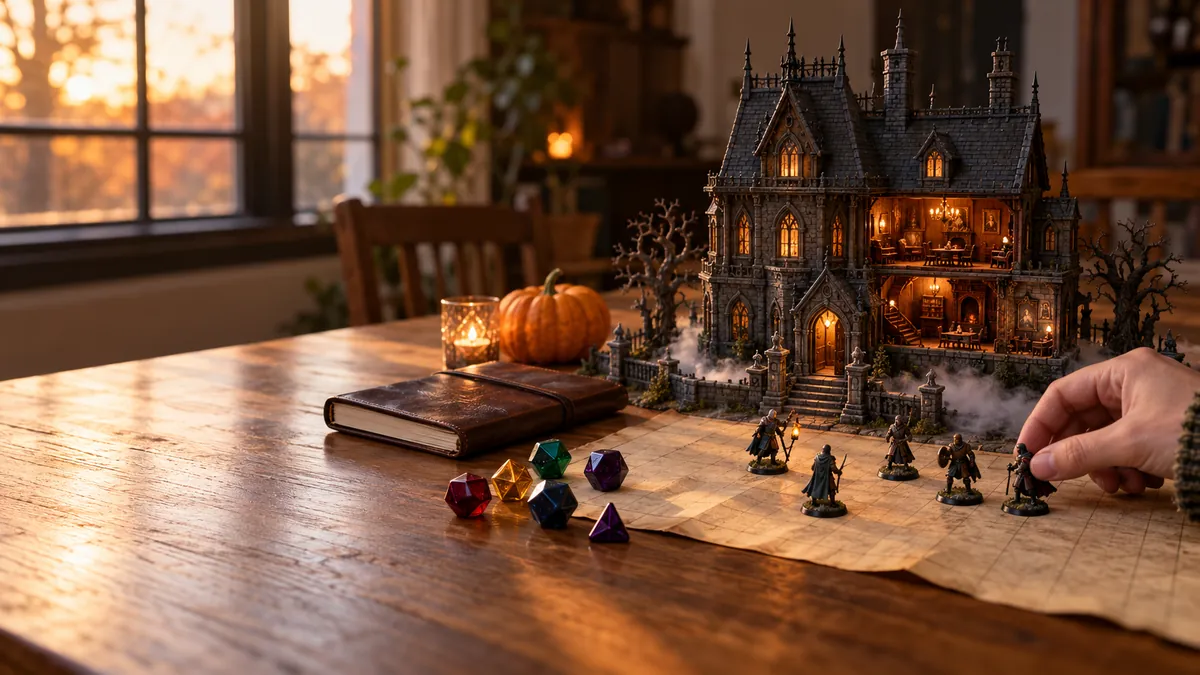
A D&D haunted house one-shot is a short, self-contained adventure where the party explores a cursed or haunted building, room by room, facing a mix of traps, eerie noncombat moments, and one or two real threats before escaping or putting the haunting to rest. It works because the structure does most of the pacing for you: new room, new problem, next door.
This guide walks through building one from scratch, using only SRD-legal content, so you can run it this weekend if you want.
What makes a haunted house one-shot work?
A haunted house one-shot lives or dies on pacing, not plot complexity. You do not need a deep backstory for the ghost. You need rooms that each do one job well.
The format naturally solves a few problems new DMs run into:
- Built-in structure. Rooms give you natural scene breaks, so you always know what happens next.
- Easy improvisation. If players go off-script, they are still inside the house, so you can redirect without breaking the fiction.
- Scalable tension. You control dread by controlling what is behind each door, not by forcing jump scares into dialogue.
- A natural ending. The house has an exit, a basement, an attic, or a final room. The adventure ends when the party leaves or the haunting breaks.
If you have never run a one-shot before, How to Run Your First One-Shot covers the basics of session structure and player expectations, which pairs well with the room-by-room approach here.
How do I build the floor plan?
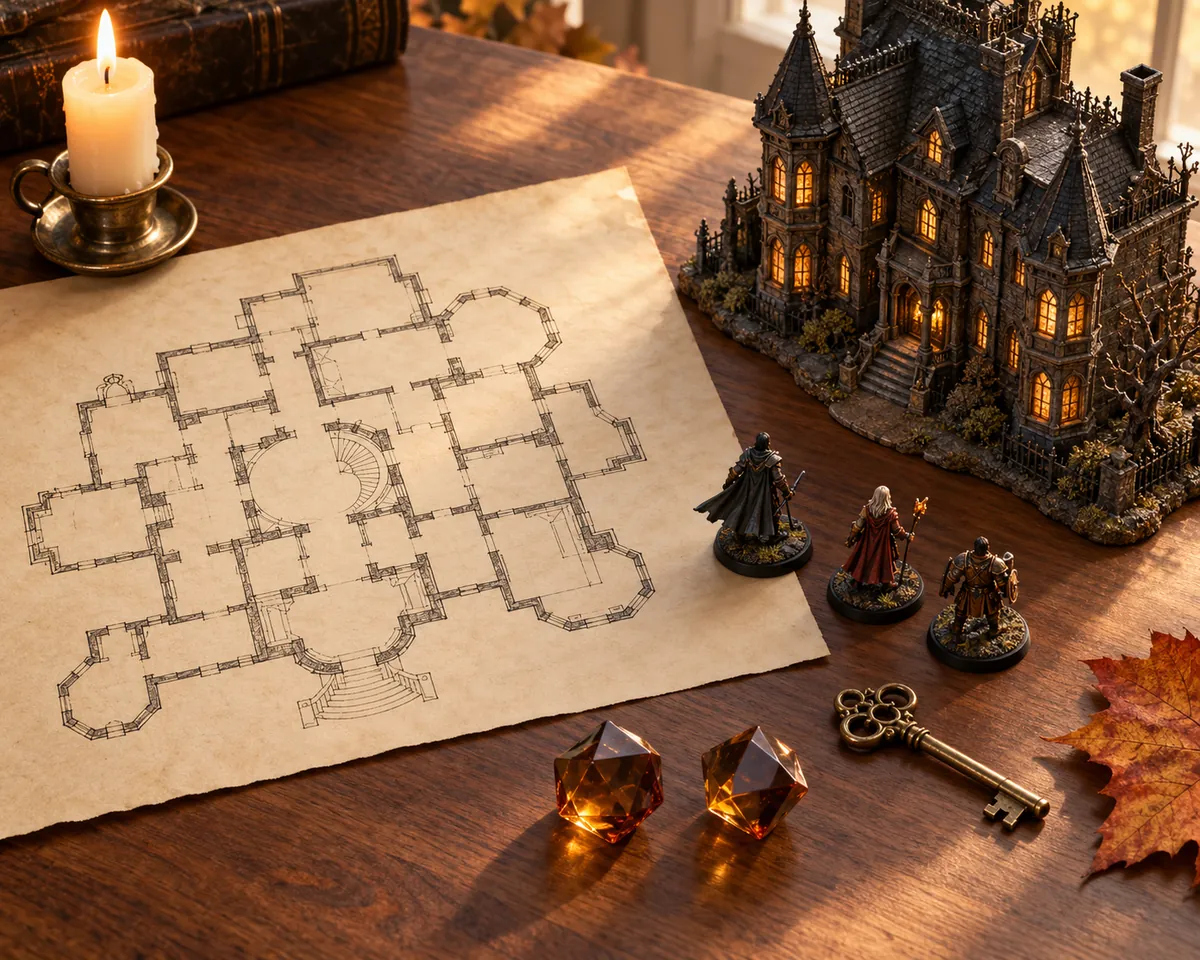
Keep it small. Six to eight rooms is plenty for a three-hour session. More than that and you will either rush the good rooms or run out of time before the finale.
A reliable layout:
- Entry hall — sets tone, maybe a locked door or a warning.
- Social or puzzle room — a portrait, a journal, an NPC ghost who wants something.
- Trap room — a mechanical or magical hazard, not a monster.
- Red herring room — looks dangerous, is not. Builds dread for later.
- Combat room — the first real fight, moderate difficulty.
- Reveal room — players learn what is actually haunting the house.
- Basement or attic — the source of the haunting.
- Final confrontation — the boss fight or the escape.
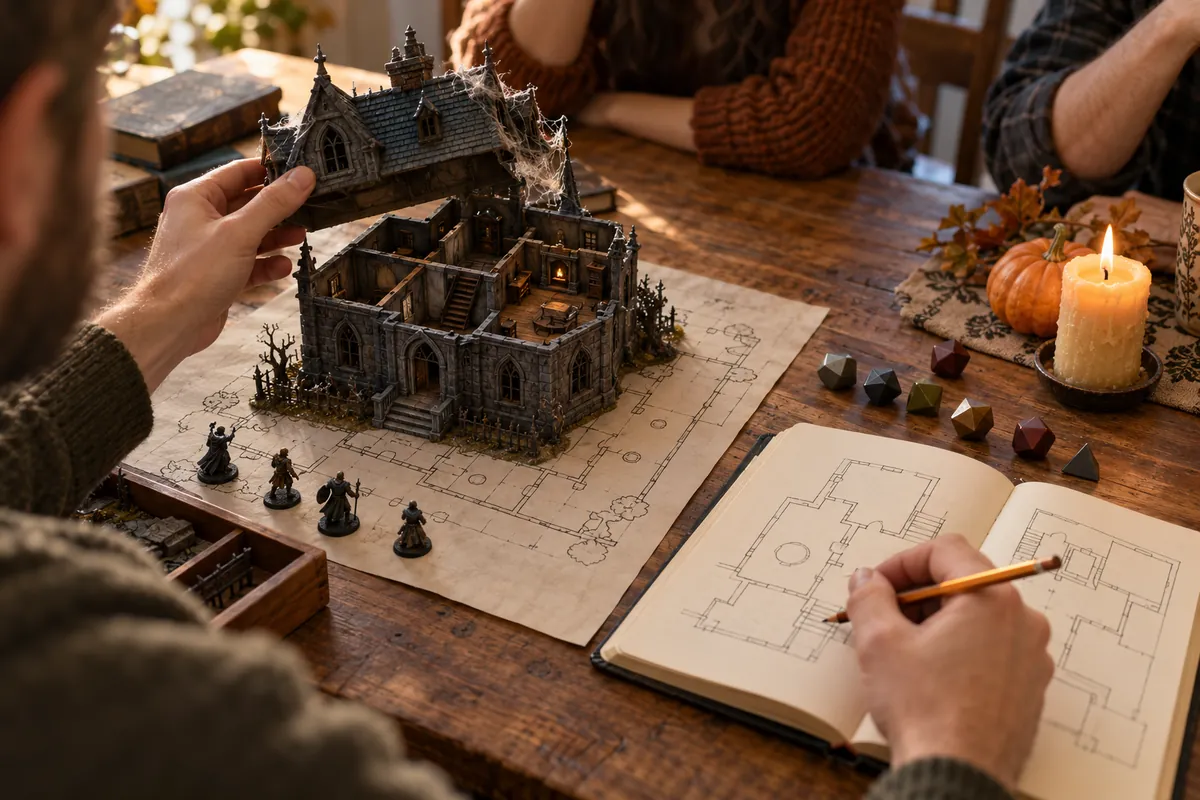
Sketch this on paper or index cards before the session. You do not need art. A DM who knows which rooms connect to which can describe the house confidently, and that confidence sells the atmosphere more than any prop.
What encounters should go in each room?
Variety is the key. If every room is a fight, the house stops feeling haunted and starts feeling like a dungeon crawl with cobwebs painted on.
Mix these encounter types across your rooms:
- Noncombat dread. A room that is simply wrong: a dining table set for guests who left mid-meal, a nursery with a rocking cradle and no child. No roll needed, just description.
- Skill-based rooms. A locked door, a collapsing floor, a riddle carved into a mirror. If you want these to feel fair rather than arbitrary, How to Run a D&D Skill Challenge That Feels Fair has a solid framework for setting DCs and consequences.
- Trap rooms. SRD traps work fine here: a pit trap, a room that floods with icy water, a chandelier rigged to fall.
- Monster rooms. Pick one or two real fights, not six. SRD-friendly options for a haunted house include a ghoul, a shadow, a specter, or a zombie, all of which fit the theme without needing homebrew stat blocks.
- The mimic twist. A haunted house is a perfect excuse for an object that is not what it seems, like a trunk, a wardrobe, or a suit of armor. If you want to build that encounter properly, see How to Build a D&D Encounter with a Mimic Players Won't See Coming.
Before you drop any fight into a room, check it against the party's actual level and size. How to Read a D&D Encounter's Difficulty Before You Run It is worth a quick skim so your "scary final room" does not accidentally become a total party kill.
How do I keep the scares from feeling cheap?
Jump scares work on screen because of sound design and timing. At a table, they rarely land the same way, and forcing one usually gets a laugh instead of a gasp.
Better tools for dread:
- Withhold information. Describe sounds and smells before sights. "You hear footsteps on the floor above you, slow and uneven," does more work than describing a monster outright.
- Use silence deliberately. Pause after a creepy line instead of filling the quiet. Let players sit in it.
- Make the house react to the party. A door that was open is now closed. A portrait's eyes seem to follow whoever just lied. Small, consistent details build unease better than one big scare.
- Telegraph real danger honestly. If a room can kill a character, give a fair warning: a skeletal hand already gripping the doorframe, a draft that smells of old blood. D&D 5e Conditions Explained: What Each One Actually Does is handy if you are using frightened, paralyzed, or poisoned conditions and want to describe their effects accurately.
How do I end the one-shot well?
Give the house a clear condition for ending, decided before the session starts. Common options:
- The party escapes through the front door once it unlocks.
- The party destroys or releases the source of the haunting (a cursed object, a trapped spirit).
- The party survives until dawn, when the haunting's power fades.
Whichever you pick, tell the players the goal early, even if it is vague ("something in this house wants you gone, or wants you to stay forever"). A one-shot with no visible finish line tends to wander, and three hours disappears fast.
When the ending hits, let it land. Describe the house settling, the candles relighting on their own, or the fog outside finally clearing. A short, specific closing image does more for the mood than a long epilogue.
A few practical table tips
- Session zero, shortened. Even for a one-shot, ask players in one line if horror content is okay and whether anything should be off the table.
- Pregens save time. Hand out ready-made characters so the whole session goes toward the house, not character building.
- Light and sound help. A single candle, a dimmed lamp, or a quiet ambient track can do a lot without any real prep.
- Know your exits. Literally. Players will try to leave through windows, chimneys, and locked doors. Decide ahead of time which ones work and which ones do not, so you are not improvising structural integrity on the spot.
If you would rather not build the floor plan and room list from scratch, The Haunted Lighthouse is a ready-to-run D&D one-shot built on this same room-by-room approach, with the map, encounters, and pacing already worked out. It is a good shortcut if Halloween is closer than your prep time. You can also browse the full range of printable adventures and DM tools if you are planning a few sessions ahead.
This post, like the rest of the site, uses only SRD 5.1 content and is not affiliated with Wizards of the Coast.
Frequently asked questions
- How long should a D&D haunted house one-shot run?
- Plan for three to four hours of table time. A haunted house works well in that window because you can cover six to eight rooms without rushing the creepy stuff or dragging out combat.
- What level should characters be for a haunted house one-shot?
- Levels 3 to 5 are the sweet spot. Characters have enough hit points and a few useful spells to survive scares, but they are still vulnerable enough that the house feels genuinely dangerous.
- Do I need a map for a haunted house one-shot?
- A simple floor plan helps a lot, even a rough sketch on paper. Players make better decisions when they can see which rooms connect, and it is easier for you to track where threats are lurking.
- Can a haunted house one-shot work for a group that has never played D&D before?
- Yes. The format is intuitive because it is room by room, with a clear goal of escaping or surviving. For a first-time group, keep the combat light and lean on description and choices instead.
- one-shots
- halloween
- dnd-5e
- dm-tips
- adventure-design
Related reading
- How to Run a D&D Skill Challenge That Feels FairLearn how to run a D&D skill challenge with clear stakes, flexible player choices, and consequences that keep the scene moving.
- How Much Should You Roll Damage vs. Take the Average?Should you roll damage or take average in D&D? Here's the RAW ruling, when each option is faster, and how to choose at your table.