October 19, 2026 · 7-min read
How to Build a D&D Encounter with a Mimic Players Won't See Coming
Your players have been burned by mimics before. Here's how to burn them again.
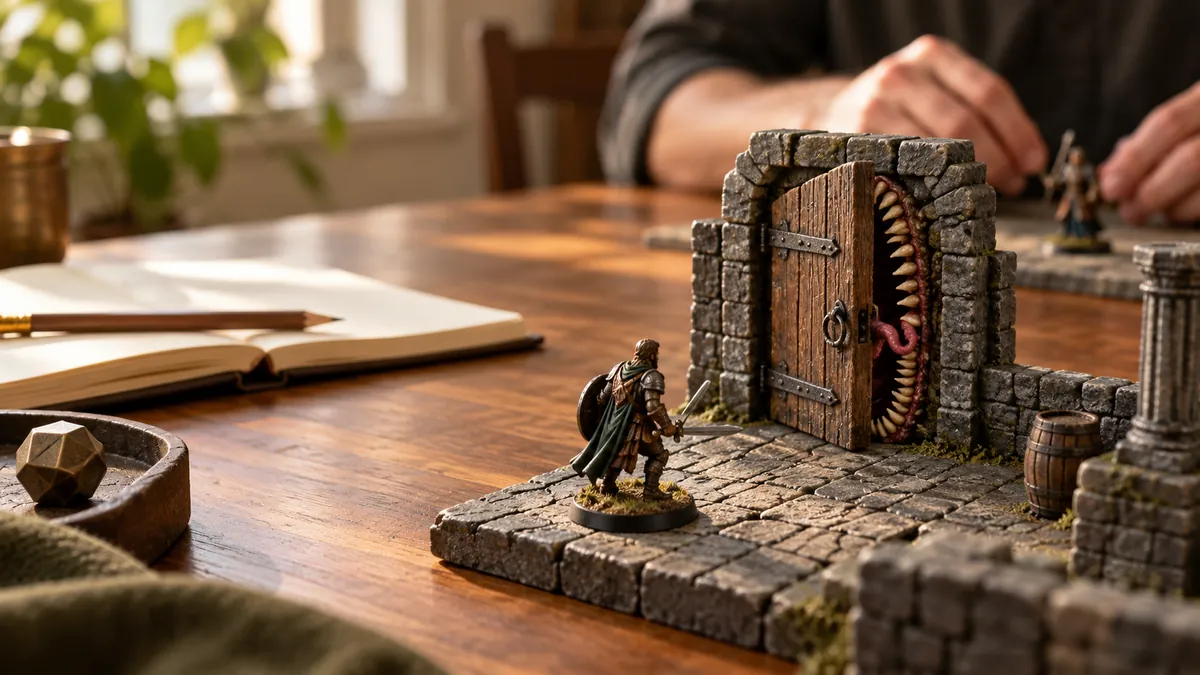
A mimic encounter surprises players when the disguise fits the room's logic, the reveal is delayed past the first obvious trigger, and at least one other object in the scene is a red herring. Skip the "suspiciously alone chest in an empty room" setup. Here's how to actually pull it off.
Mimics have a reputation problem. Most tables have been burned once, which means every chest after that gets poked with a 10-foot pole before anyone touches it. If you want a mimic to land, you need to out-think the paranoia you created last time, not repeat the trick that caused it.
What makes a mimic encounter predictable?
Three habits give mimics away before the dice even come out:
- Isolation. A single chest in an otherwise empty 10x10 room screams "this is the trap." Real dungeons are cluttered.
- Convenience. Treasure that's too easy to reach, sitting right where the party would logically rest or search, reads as bait.
- Silence. If the mimic is the only interactive object in the whole encounter, players will test it first out of habit.
Fix those three things and you've already beaten the metagame instinct that ruins most mimic reveals.
How do I pick a disguise that fits the scene?
The SRD only locks mimics into looking like "nondescript objects," which gives you a lot of room to work with. Match the disguise to what the room would already contain:
- A door handle or hinge in a corridor that's otherwise unremarkable.
- A stack of crates in a dockside warehouse, where crates are everywhere anyway.
- A shrine offering bowl in a temple ruin, where touching religious items feels expected.
- A bedroll or travel pack in an abandoned camp, something a cautious party might loot without thinking twice.
- A wine rack or barrel in a tavern cellar, surrounded by a dozen identical barrels.
The goal is an object the players would interact with anyway, for reasons that have nothing to do with treasure. A door handle gets touched because they're opening a door. A barrel gets tapped because they're checking for an ambush, not loot.
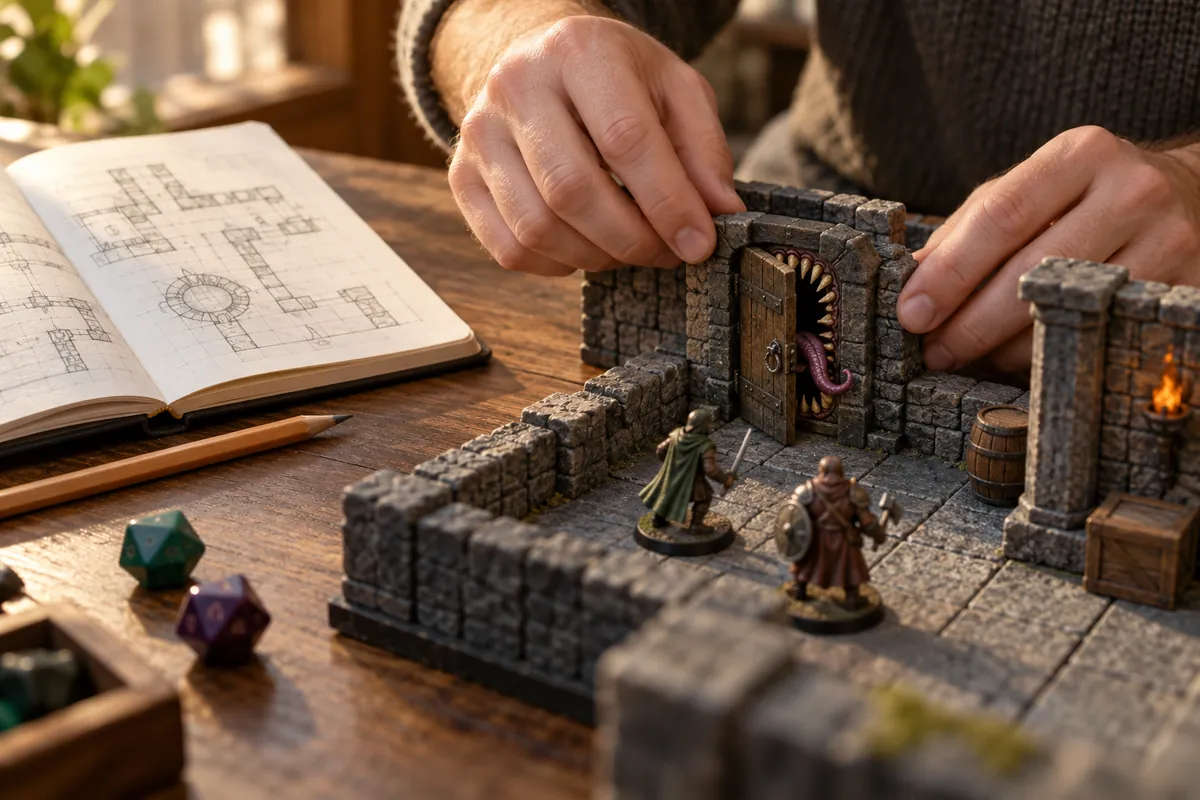
Where should I place the mimic for maximum surprise?
Placement does more work than disguise. A great costume in the wrong spot still gets spotted. Try these setups:
- Mid-dungeon, not at the climax. Players expect danger at the vault door. They don't expect it in the hallway they've already walked past twice.
- Among duplicates. If the mimic is a crate, put six other crates in the room. Players can't Investigate all of them without burning real time, so they'll gamble.
- Attached to a real reward. Put actual coin or a minor item a few feet from the mimic. The payoff for searching the room is real, which keeps players searching instead of just avoiding everything.
- After a false mimic reveal. If an earlier session already had a mimic, consider planting an object that looks suspicious but is completely ordinary first. Burn their caution on something harmless before the real one shows up.
- In a non-treasure role. A mimic disguised as a privy, a well bucket, or a tavern stool catches parties who've only ever been trained to suspect chests.
How do I handle detection without giving it away?
Passive Perception and Investigation checks are your pacing tool here. Don't narrate "the chest looks slightly off" the second someone walks in; that's a free tell.
Instead, hold back details until a player actively investigates or until their passive score clears a reasonable threshold. If you're not sure what that threshold should look like at your table, this breakdown on how to calculate passive Perception in D&D 5e walks through setting DCs that feel fair instead of arbitrary.
A good reveal sequence looks like this:
- Ambient detail first. Mention a faint smell, a draft, or an odd texture, something true but not conclusive.
- Specific detail on investigation. If a player rolls well or specifically examines the object, give them something concrete: it's slightly warm, it doesn't have dust on it like everything else.
- Mechanical confirmation last. Save the obvious tell (it breathes, it has teeth) for the moment someone touches it or the mimic decides to act.
This keeps canny players rewarded for good roleplay without punishing everyone else for not metagaming.
How do I run the fight once it's revealed?
A mimic's Adhesive trait and bite damage can swing harder than its CR suggests, especially against a party that just got grappled by "furniture." A few running notes:
- Telegraph the grapple. Once a creature is stuck, say so clearly. Players should understand their action economy is about to change.
- Let allies help. A grappled character can still be freed by an ally's action, so make sure players know that's an option mid-fight.
- Don't stack it with other monsters. A mimic works best alone or paired with a minor threat, like a couple of weak scavengers drawn by the noise. If you want a second gut check on whether the fight is too much, run it through how to read a D&D encounter's difficulty before you run it before the session.
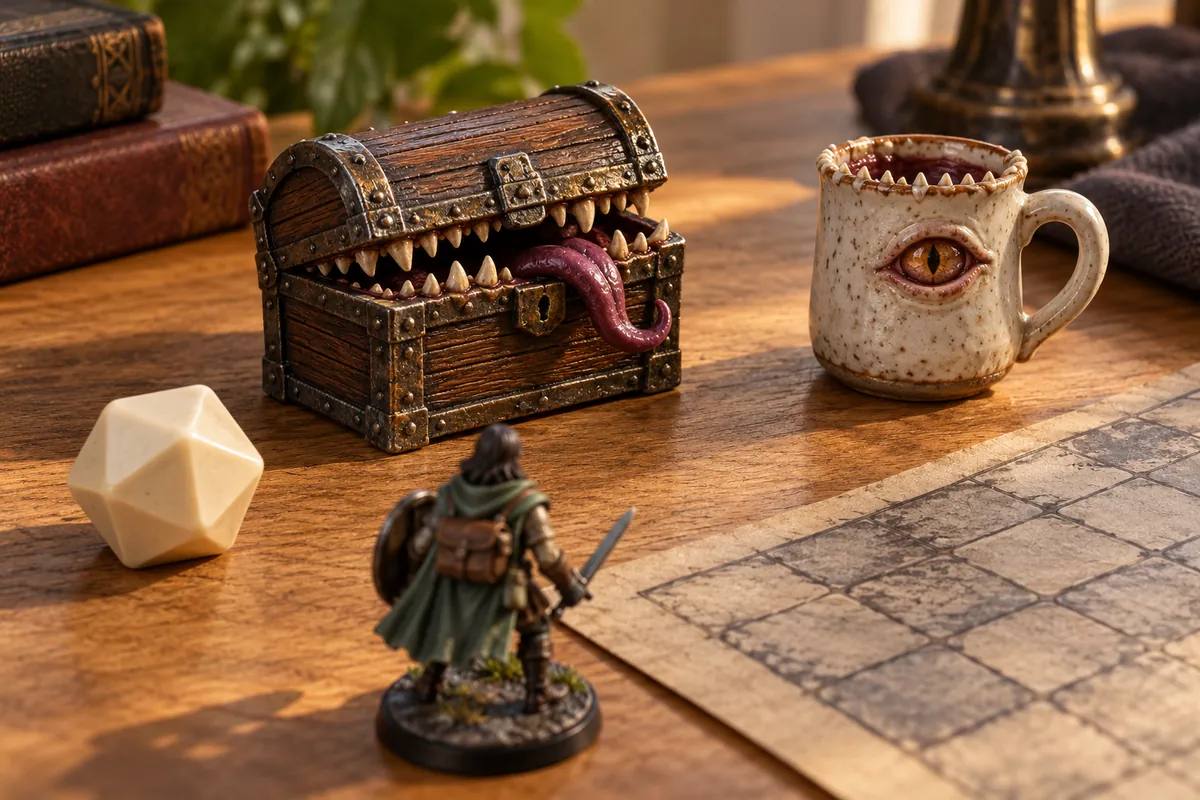
What should I do after the fight to keep the trick alive?
The first mimic in a campaign is a free scare. The second one only works if you've managed expectations. After the reveal:
- Put real treasure in ordinary objects for the next few sessions, so suspicion doesn't calcify into a reflex.
- Occasionally let a player's caution pay off with something good, like finding an actual trap, so the habit of checking stays rewarding rather than wasted effort.
- Save the next mimic for a context nobody would expect, like a disguise that isn't treasure-adjacent at all.
Mimics are most fun as a recurring joke between you and your table, not a one-time jump scare. If you want that joke sitting on your actual wall between sessions, the Mimic or Chest funny D&D print is a tongue-in-cheek bit of game room decor built around exactly this dilemma, and it's a fun nod for any table that's been burned by one of these before. It's one small piece among the rest of the shop if you're browsing for other table extras.
Running a mimic well is really just encounter design with an extra layer of misdirection. If you're still nailing down the fundamentals of putting any encounter together, building your first balanced encounter is a solid place to start before you add tricks like this one on top.
This post uses only material from the D&D 5.1 System Reference Document and is not affiliated with Wizards of the Coast.
Frequently asked questions
- Are mimics always chests in D&D 5e?
- No. The SRD describes mimics as shapechangers that can take the form of any object, so chests are just the most famous option. Doors, furniture, and even piles of coins all work within the rules.
- Can players detect a mimic before it attacks?
- Mimics have Adhesive and look like inanimate objects at a glance, but a successful Investigation or Perception check against their passive stats can reveal something is off before anyone touches it. A high Investigation roll might notice faint breathing or a texture that doesn't match the room.
- What level should players be to fight a mimic?
- A single mimic is a reasonable challenge for a party of four around level 2 to 4, though its damage and grapple can hit harder than its Challenge Rating suggests. Check the party's actual action economy, not just the CR, before dropping one in.
- How do I stop players from just avoiding every object after a mimic encounter?
- Mix in plenty of real treasure and ordinary objects after the reveal so suspicion doesn't become the default. If every chest is dangerous, you've trained paranoia instead of tension.
- dm help
- dnd monsters
- encounter design
- mimic
- dungeon design
- 5e
Related reading
- D&D 5e Bar Fight Rules: How to Run a Nonlethal Tavern BrawlRun a D&D 5e bar fight without a TPK: make all damage nonlethal, cap brawlers at 3–5 with 4–10 HP, use improvised weapons and set a clear end.
- How to Calculate Passive Perception in D&D 5e (With Examples)Passive Perception in D&D 5e = 10 + your Perception modifier. Formula, player character and monster examples, and how advantage and the Observant feat change it.
- How to Read a D&D Encounter's Difficulty Before You Run ItLearn how to tell if a D&D encounter is too hard before you run it, using action economy, damage math, and quick red flags any DM can check in minutes.