July 20, 2026 · 7-min read
How to Build a Homebrew Magic Item Without Breaking Your Game
That perfect item idea in your head can survive contact with your players' dice — here's how to keep it fun instead of game-breaking.
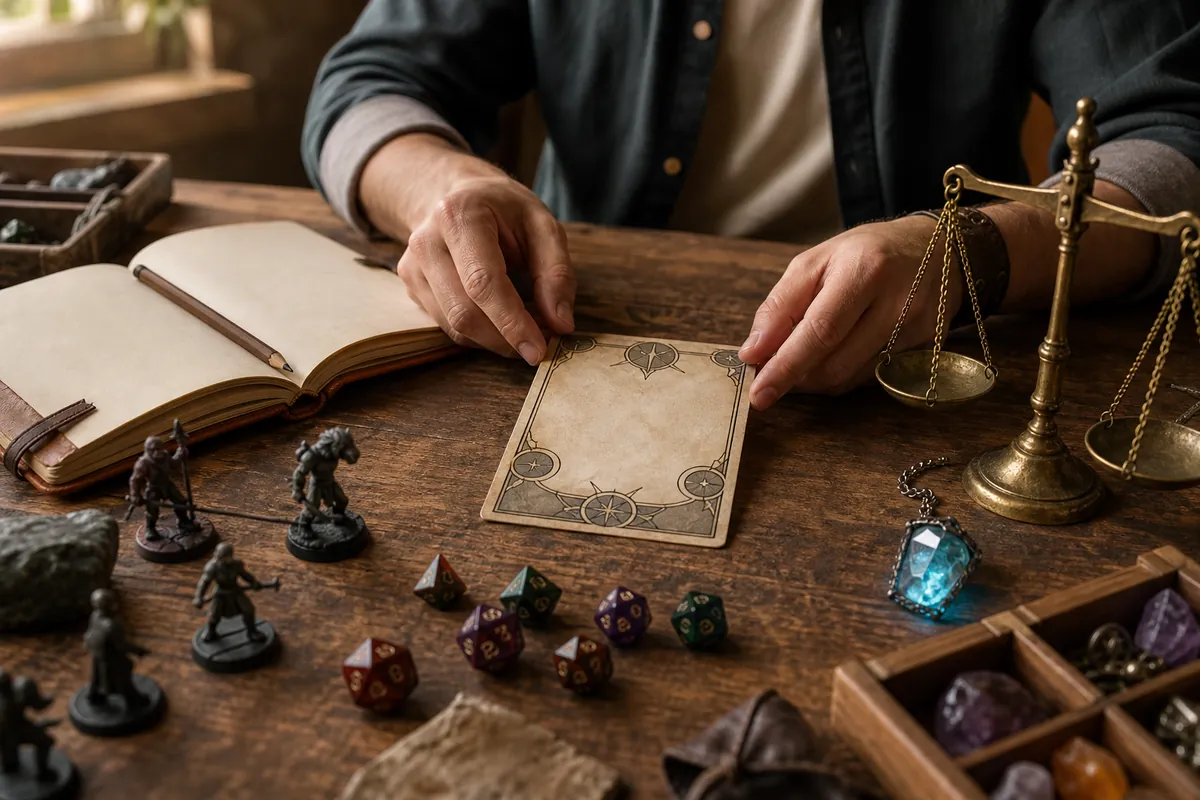
To make a homebrew magic item in D&D 5e, start from an existing item of similar rarity, change one mechanic at a time, and add a real cost or drawback so the power stays in balance with your game. The fastest way to break a campaign is to build an item from a cool idea alone, with no reference point for how strong it actually is at the table.
This guide walks through the process step by step, from choosing a rarity tier to testing the item before it hits your players' hands. Not affiliated with Wizards of the Coast; all mechanics referenced here come from the free SRD 5.1 rules.
What rarity tier should my item be?
Rarity in 5e is really a shorthand for "how much should this matter." Match your idea to the tier it belongs in before you write a single mechanic.
- Common: Flavor items with minor, non-combat effects. A pipe that never runs out of tobacco, a comb that always leaves hair perfectly styled.
- Uncommon: A small, reliable combat or utility boost. Think +1 to a specific roll type, or a limited-use spell effect.
- Rare: A meaningful power spike, usually gated behind attunement or a daily limit. This is where most "signature weapon" homebrew items should sit.
- Very rare / legendary: Reserved for high-level campaigns. These items should change how a character plays, not just add a bonus.
If your idea does more than one of these things at once, that's your first sign it needs trimming.

How do I decide what the item actually does?
Good homebrew items usually do exactly one thing well, not three things adequately. Pick a single lane before you touch numbers.
Ask yourself which category the item falls into:
- Numeric boost – a bonus to attack rolls, saves, AC, or a skill.
- New option – grants a spell, a special action, or a unique maneuver.
- Narrative tool – solves problems outside combat, like communication, disguise, or travel.
- Resource – stores charges of something (spell slots, healing, teleports) that recharge over time.
Once you know the category, compare it against a published item in the same rarity and category. If a rare wand grants three charges of a 3rd-level spell effect per day, your rare item should be in that same neighborhood, not granting an at-will version of the same thing.
Should every magic item have a drawback?
Not every item needs a curse, but every strong item needs a limit. There's a difference.
A limit is a built-in cost that keeps the item from being free power:
- Charges that recharge slowly (1d3 per dawn, not every short rest).
- Attunement, which caps how many strong items one character can run at once.
- A trigger condition, like only working in darkness, underwater, or during combat.
- A cooldown, such as once per long rest.
A drawback goes further and adds genuine risk or downside, which is optional and works best on items with a story hook. A blade that whispers when its wielder is afraid, a ring that grants luck but occasionally attracts the wrong kind of attention. Save true drawbacks for items you want players to have complicated feelings about, not every item in your binder.
If you're still shaping how items fit into your prep routine alongside encounters and NPCs, building your first balanced encounter covers the same "start simple, add complexity carefully" approach from the monster side of the table.
How do I test a homebrew item before using it?
Playtesting a magic item doesn't need a whole session. A few minutes of math and one real combat is usually enough.
Step 1: Run the damage or bonus through expected math. Compare the item's effect to what a character of that level already deals or rolls on average. A +1 weapon adds roughly 5% more hit chance and damage over a normal weapon; anything your item adds should be weighed against that baseline.
Step 2: Check the action economy. Does the item require an action, a bonus action, or nothing at all to use? Free, no-action effects are the single most common source of accidental overpowered items, since they cost the player nothing to use every single round.
Step 3: Hand it to one player for a session and watch. Nothing reveals a balance problem faster than a real table. Watch for players building their entire turn around the item, or for the item sitting unused because it's not worth the action cost.
Step 4: Adjust in small increments. If it's too strong, reduce charges or add a save DC before you cut the core effect entirely. If it's too weak, lower the activation cost before you raise the numbers.
What common mistakes make homebrew items overpowered?
Most broken homebrew items share the same few root causes, and they're easy to catch once you know to look for them.
- Stacking multiple strong effects on one item. A weapon that does bonus damage, grants a spell, and boosts a saving throw is really three items wearing one costume.
- No action cost. If an effect is always on with no trigger, no charge, and no roll, it's effectively a permanent stat boost.
- Scaling with level instead of rarity. Items that automatically get stronger as the character levels up are much harder to balance than items with a fixed, known effect.
- Ignoring what the class already does. An item that duplicates or outshines a class feature makes that feature feel pointless, which frustrates the player who built around it.
- Skipping the "at my table" test. A famous published item can still unbalance your specific campaign if your party comps or encounter difficulty differ from the norm it was written for.
Keeping homebrew items organized at the table
Once you've built a few solid items, the next problem is tracking them consistently, item cards, charges used, attunement slots, session to session. A simple system beats trying to remember it all; the same logic behind organizing a DM binder that actually helps at the table applies just as well to a growing stack of homebrew items.
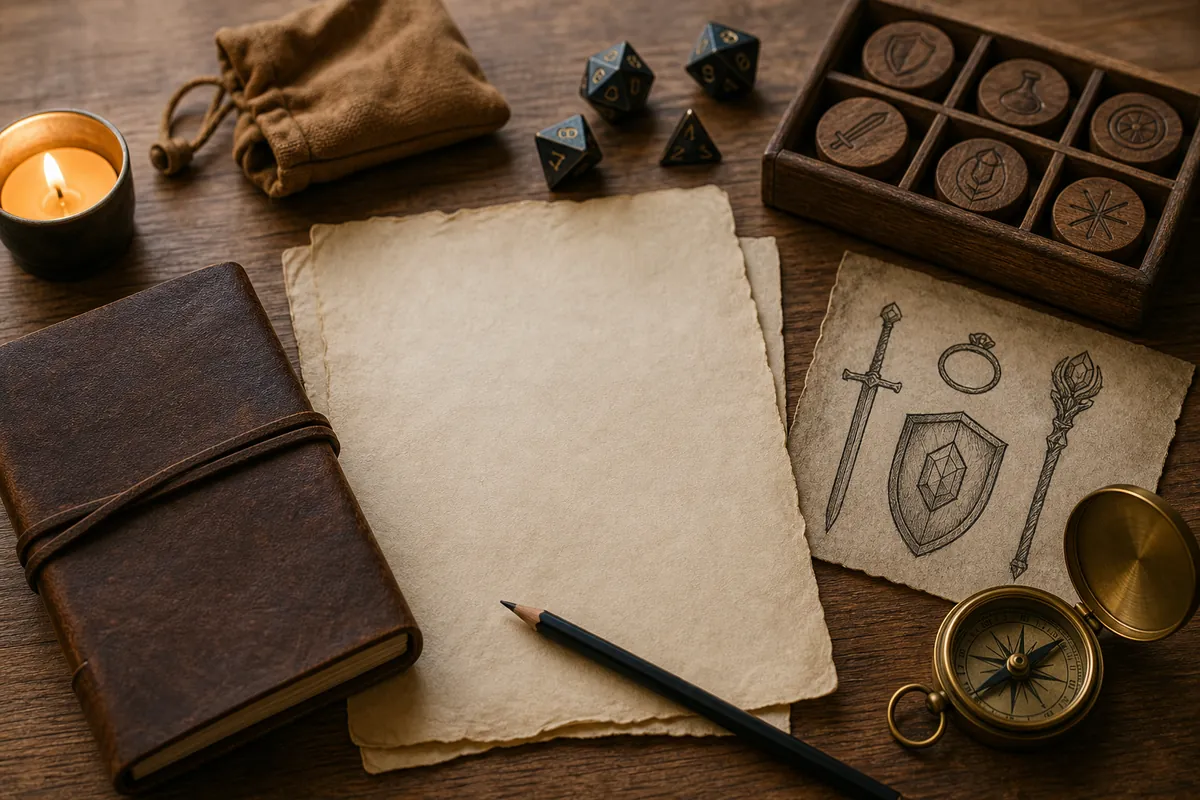
If you'd rather hand players something physical to fill in as they discover an item's quirks in play, a set of blank fillable magic item cards works well for exactly this. They give you the same format as printed item cards, but blank, so you can pencil in your own name, rarity, and effect once it's playtested and locked in. Browse the full shop for other printable DM tools built around the same table-ready approach.
Homebrew magic items are one of the most rewarding parts of running a game, a well-placed item can define a character's whole arc. Build slow, test in play, and let the rarity tiers do the balancing work for you.
Frequently asked questions
- Is it okay to reskin an existing magic item instead of building one from scratch?
- Yes, and it is often the safer choice. Taking a published item and changing its name, flavor, and damage type keeps the math already balanced while still feeling custom to your table.
- How many magic items should a D&D 5e party have by a given level?
- There is no fixed number, but most games hand out a small handful of minor items early and one or two significant ones by the time the party reaches double digits in level. Pace items to moments, not levels.
- Can a homebrew magic item be too weak to matter?
- Yes. An item that never gets used at the table is just as much a design failure as one that is overpowered. If players forget they have it, the drawback or activation cost is probably too steep for the benefit.
- Do homebrew magic items need a rarity rating?
- It helps. Rarity is really shorthand for how strong an effect should be and at what level it should show up, so rating your item keeps it consistent with the items already in your game.
- Should players help design their own magic items?
- It is a great way to get buy-in, especially for a signature item tied to a character's backstory. Let them pitch the flavor and function, then you set the numbers and any drawback.
- dnd 5e
- homebrew
- magic items
- dm tools
- game balance
Related reading
- How to Divide Spell Slots Across a Long Rest D&D DayLearn how to manage spell slots in D&D by budgeting them across an adventuring day instead of spending them all in the first fight.
- How to Make a D&D Magic Item Feel Legendary, Not Just UsefulLearn how to make DnD magic items feel special with sensory detail, personality, and history instead of just stat bonuses.
- How to Split Loot in D&D 5e Without Party ArgumentsLearn how to split loot in dnd 5e with equal coin shares, fair magic item claims, and a simple system for tracking shared party treasure.