October 28, 2026 · 7-min read
How to Track Spell Slots in D&D 5e (Simple Methods That Work)
That sinking moment when you cannot remember whether you already cast your last 3rd-level spell.
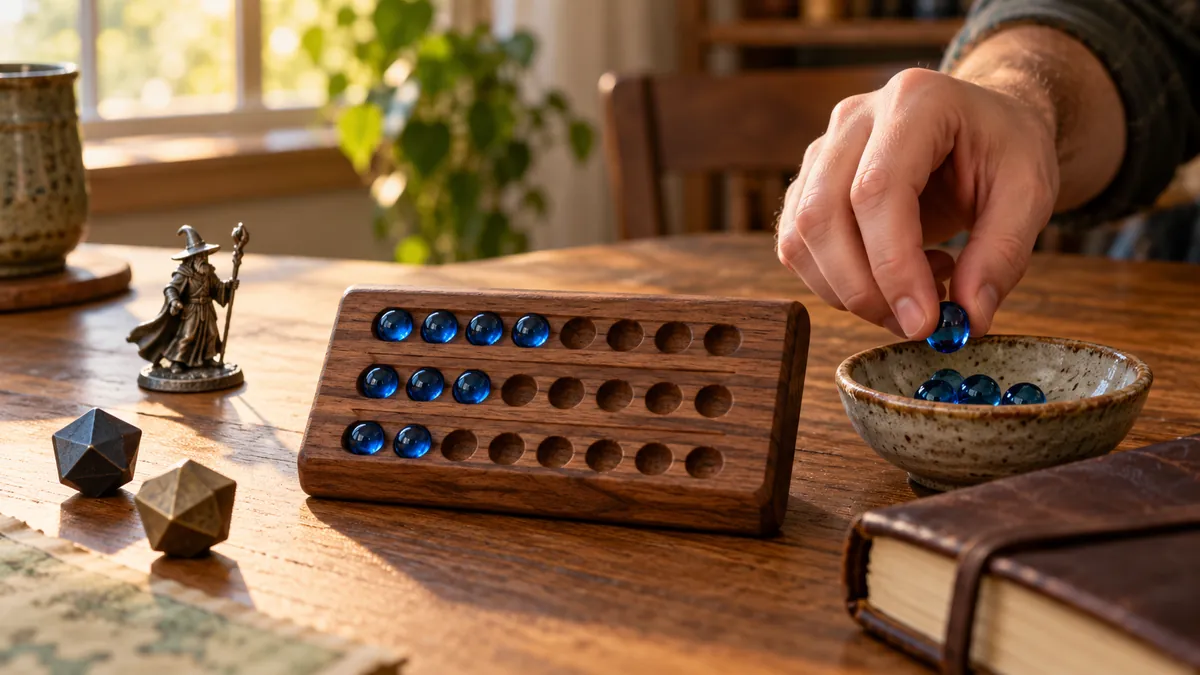
The easiest way to track spell slots in D&D 5e is to use a physical marker: mark or move one token, bead, or checkbox the moment you declare a leveled spell, then reset everything after a long rest. If you do it before you roll anything, you will almost never lose count.
If you are newer to spellcasting, this is a very common stumble. Combat moves quickly, you are thinking about targets and positioning, and suddenly you cannot remember whether you used your second or third 2nd-level slot. Here are simple methods that work at a real table.
What exactly is a spell slot, and what uses one?
A spell slot is a limited resource that fuels your leveled spells. Your class and level determine how many slots you have at each spell level, and you can find those numbers in your class table in the SRD.
A few reminders that clear up most confusion:
- Cantrips are free. They never use a slot.
- Leveled spells use a slot of that level or higher.
- Upcasting uses the higher slot. Mark the level you spent, not the spell's base level.
- Rituals can skip the slot if your class allows ritual casting and the spell has the ritual tag. They take 10 extra minutes to cast.
Knowing what costs a slot is half the battle. If you want a refresher on reading a spell's details, see how to read a spell description.
How do I track spell slots on my character sheet?
The classic method is a row of checkboxes or circles for each spell level. It costs nothing and works fine if you build one habit: mark the box when you declare the spell.
Try this routine:
- Decide which spell you are casting.
- Mark a slot of the level you will spend.
- Then roll attacks, saves, or damage.
Pencil beats pen here, since you will erase everything after a long rest. Some players prefer a slash for each used slot and an X once the whole row is gone, which makes it easy to see at a glance what is left.
If your sheet only has a single line for slots, draw your own small grid in the margin with one column per spell level. It takes 30 seconds.
What are the best physical ways to track slots?
Physical markers work well because your hands do the remembering. Moving something is harder to forget than ticking a box.
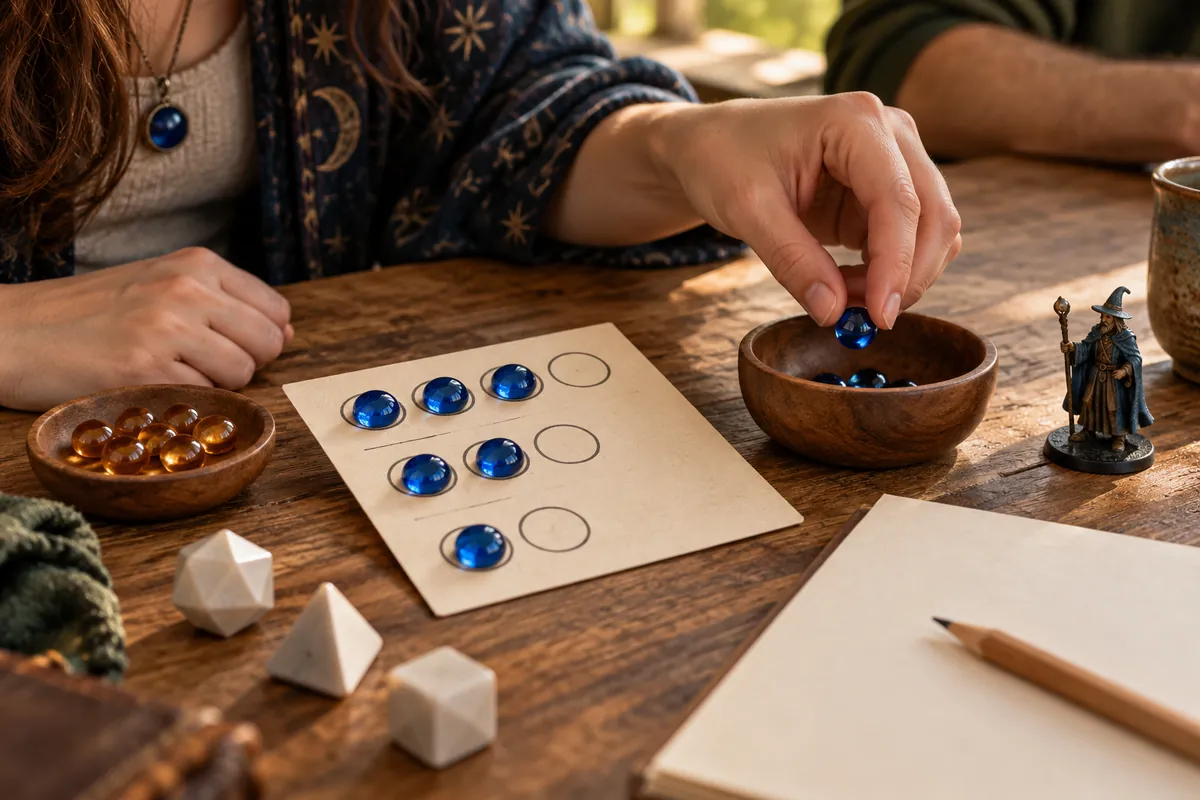
Here are a few options players like:
- Beads or gems on a card. Start with a bead on each circle. When you cast, move one off to the side.
- Coins or glass tokens. Keep a small pile per spell level and slide one to the "used" pile.
- Dice as counters. Set a die to the number of slots remaining at each level. It is compact, but easy to bump, so tuck the dice in a tray.
- Sticker or cut-out markers. Stick a marker on each slot and peel or flip it as you spend it.
- Colored tokens by level. Use one color per spell level so you never mix up a 1st-level slot with a 3rd-level one.
Pick whatever fits your table space. If you play online or on a cramped table, dice or checkboxes are usually the most practical.
How do I avoid losing count mid-combat?
Most lost slots come from the same few habits. These small fixes help:
- Mark before you roll. Spending the slot first means you cannot forget it during a flurry of dice.
- Say it out loud. "Casting Shield, spending a 1st-level slot" takes two seconds and keeps your DM and neighbors in the loop.
- Track reactions too. Spells like Shield or Counterspell use slots on other creatures' turns, and those are the ones people forget.
- Keep your tracker next to your dice. If it is out of sight, it is out of mind.
- Check your remaining slots at the start of your turn. A quick glance helps you decide whether to spend a big spell or save it.
If you also juggle concentration spells, it helps to track which one is active at the same time. This guide on running concentration in 5e pairs well with a slot tracker.
How do I recover spell slots after a rest?
Resetting is the simple part, as long as you know which rule applies to your class. Here is the quick version, based on SRD rules:
- Long rest: Most casters regain all expended spell slots after finishing a long rest (at least 8 hours, of which at least 6 are sleep or light activity).
- Wizard's Arcane Recovery: Once per day after a short rest, a Wizard can recover some expended slots. The combined level of the slots recovered is limited by your Wizard level, and no recovered slot can be 6th level or higher.
- Warlock's Pact Magic: Warlocks regain all expended Pact Magic slots after a short or long rest.
A practical reset routine:
- Move every bead back, erase every mark, or flip every token.
- Do it out loud with the table, such as "Long rest done, slots reset."
- If it is a short rest, only reset what your class actually recovers.
How should I handle a Warlock's different slots?
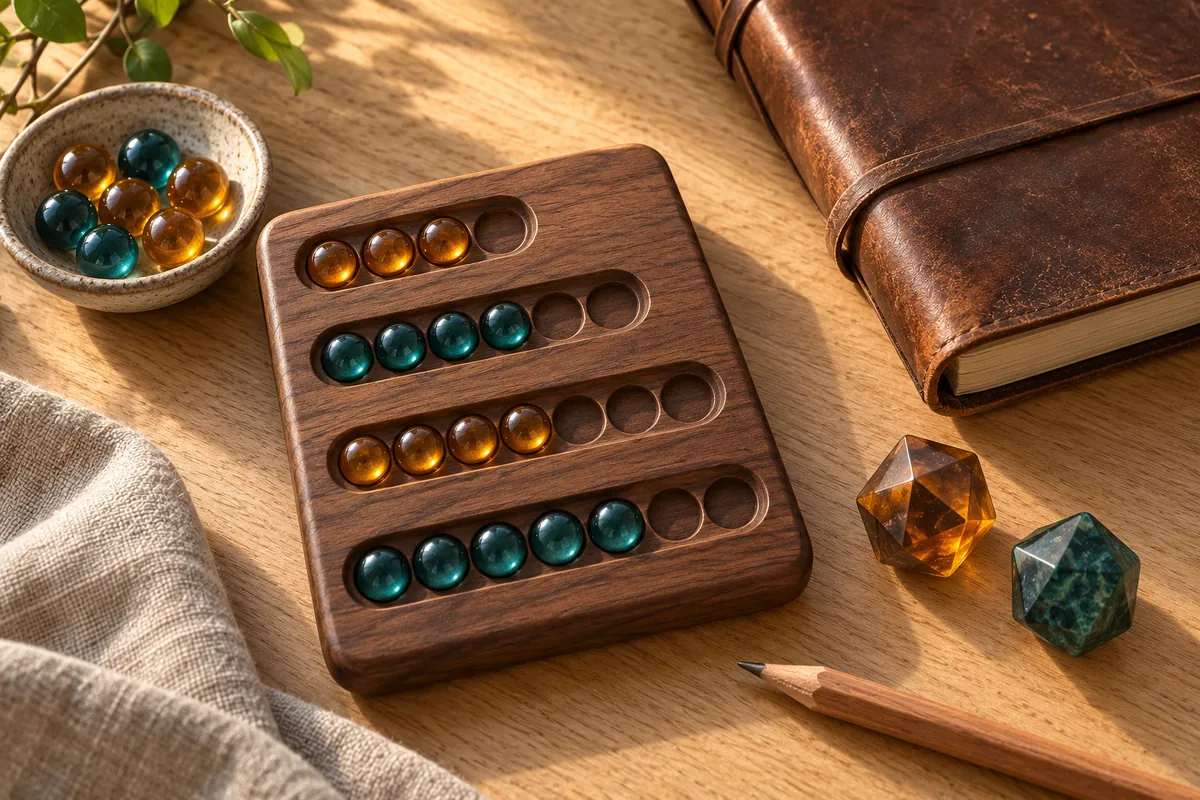
Warlocks are the odd one out. Pact Magic gives a small number of slots that are all the same level, and they come back on a short rest. That means a single row of markers is enough, and you will reset it more often than other casters do.
A handy tip is to use a different color or a separate card for Pact Magic slots. If you multiclass, remember that Pact Magic slots and regular Spellcasting slots are tracked separately in terms of recovery, even though you can spend either kind to cast your spells. Keep the two groups visibly apart so you do not reset the wrong one.
How many slots should I spend each fight?
Tracking is easier when you plan around it. Most adventuring days include several encounters, so spending everything in the first fight can leave you stranded. A simple rule of thumb is to decide before the day starts how many slots you are willing to burn per encounter, then adjust if the fight turns dangerous.
For a deeper look at pacing, check out how to divide spell slots across a long rest day. It walks through budgeting so your tracker tells you something useful, not just what you have lost.
Is there a ready-made tracker I can print?
If you would rather not draw your own, a printable tracker keeps everything in one place. The DnD Tracker and Condition Sticker Sheet Printable includes HP, spell slot, and death save markers as cut-out combat tokens, so you can mark and clear slots without erasing your sheet over and over. It is an instant download, which is handy if you need something before tonight's session.
You can also browse more table tools in the Parchment & Dice shop. Parchment & Dice is not affiliated with Wizards of the Coast, and all rules references here follow the SRD 5.1.
Quick checklist for your next session
- Know your slots per level before the game starts.
- Choose one tracking method and stick with it.
- Mark the slot before you roll.
- Say the slot level out loud.
- Reset based on your class's rest rules.
Pick one method, try it for a full session, and adjust from there. The best tracker is the one you actually use.
Frequently asked questions
- Do I mark off a spell slot when I cast a cantrip?
- No. Cantrips do not use spell slots, so you can cast them as often as you like. Only leveled spells expend a slot.
- When do spell slots come back in D&D 5e?
- Most spellcasters regain all expended spell slots after a long rest. Wizards can recover some slots on a short rest with Arcane Recovery, and Warlocks regain their Pact Magic slots on a short or long rest.
- What if I cast a spell using a higher-level slot?
- Mark off the slot level you actually used, not the spell's base level. If you cast a 1st-level spell using a 3rd-level slot, you expend one 3rd-level slot.
- What is the easiest way to track spell slots if I keep forgetting?
- Use something physical that changes when you cast, like moving a bead or flipping a token. Marking the slot before you roll or describe the spell makes it a habit rather than an afterthought.
- spell slots
- spellcasting
- player tips
- dnd 5e
- character sheet
- table tools
Related reading
- How to Run Concentration in D&D 5e: Rules, Examples, TipsHow does concentration work in D&D 5e? Learn the Constitution save DC, what breaks it, and simple ways to track it at the table.
- How to Memorize a Spell List Without Flipping Pages Mid-CombatLearn how to remember spells in dnd without looking them up, using grouping, repetition, and table-ready cards instead of flipping the Player's Handbook.
- How to Divide Spell Slots Across a Long Rest D&D DayLearn how to manage spell slots in D&D by budgeting them across an adventuring day instead of spending them all in the first fight.