July 15, 2026 · 7-min read
How Long Should a D&D Turn Take? Speeding Up Combat
If your combat rounds are eating your whole session, the fix isn't more rules - it's tighter turns.
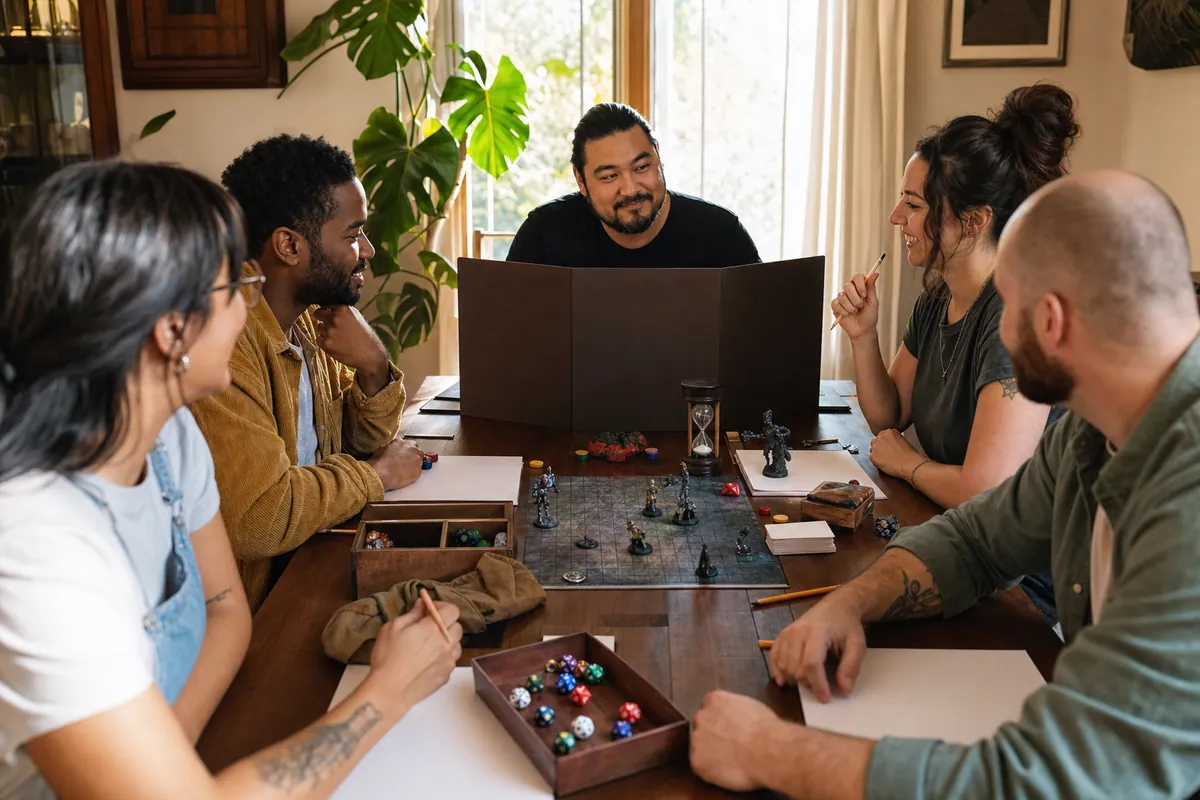
A D&D turn should take 30 to 60 seconds for a simple attack and up to two minutes when a player has a real tactical decision, and a full round for a four-person party lands somewhere around six to eight minutes once the monsters act too. If your fights are running much longer than that, the fix is almost never "add more rules" - it's tightening decisions, reducing lookups, and keeping the table's attention on the fight instead of on side conversations.
Knowing how to speed up combat in D&D matters because slow rounds are the single biggest energy drain in a session. A tense boss fight can turn into a slog if every turn takes three minutes of hemming and hawing. The good news is that most of the fix is process, not talent - you don't need faster players, you need a tighter loop.
What's actually slowing down your combat rounds?
Before you change anything, figure out where the time is really going. In most groups it's one or more of these:
- Decision paralysis - a player stares at their character sheet trying to pick between six options.
- Rules lookups - someone flips through a book mid-turn to check how grappling or advantage works.
- DM bookkeeping - you're flipping between five monster stat blocks trying to remember who's bloodied and who has a condition.
- Side conversations - the table chats about something unrelated while waiting for their turn.
- Math friction - damage rolls, saving throws, and modifiers get re-explained every single time.
Once you know which of these is your table's bottleneck, you can target it directly instead of guessing.
How do I speed up my own turns as DM?
Your turns as DM set the pace for the whole table - if you're slow, everyone else feels licensed to be slow too. A few habits fix this fast:
- Pre-roll initiative and note it before the session starts, if you know who's showing up.
- Have monster stat blocks summarized on an index card: AC, HP, attack bonus, damage, and any recharge abilities, so you're not paging through a monster manual mid-fight.
- Decide monster tactics in advance during prep, not live at the table. You don't need a full script, just a rough sense of whether this creature fights smart or fights desperate.
- Narrate briefly, then roll. Save the vivid description for after you know whether the attack hits.
If you want a broader prep routine that covers this alongside the rest of session planning, prepping a session in 30 minutes walks through a workflow that leaves room for exactly this kind of combat shorthand.
How can I get players to decide faster on their turns?
The biggest speed gain usually comes from changing what happens before a player's turn, not during it.
- Announce "on deck": tell the player two turns away that they're up soon, so they start planning instead of reacting cold.
- Ask for the plan out loud: "What are you doing?" prompts action faster than silence does.
- Set a soft time expectation: something like "let's aim for about a minute per turn" said once at session zero removes awkwardness later.
- Pre-build turn options: encourage players to know their top two or three moves before initiative is even rolled, especially spellcasters with big spell lists.
None of this requires being harsh. Most players want to move faster, they just need a nudge and a bit of structure.
What table rules cut turn time without feeling rushed?
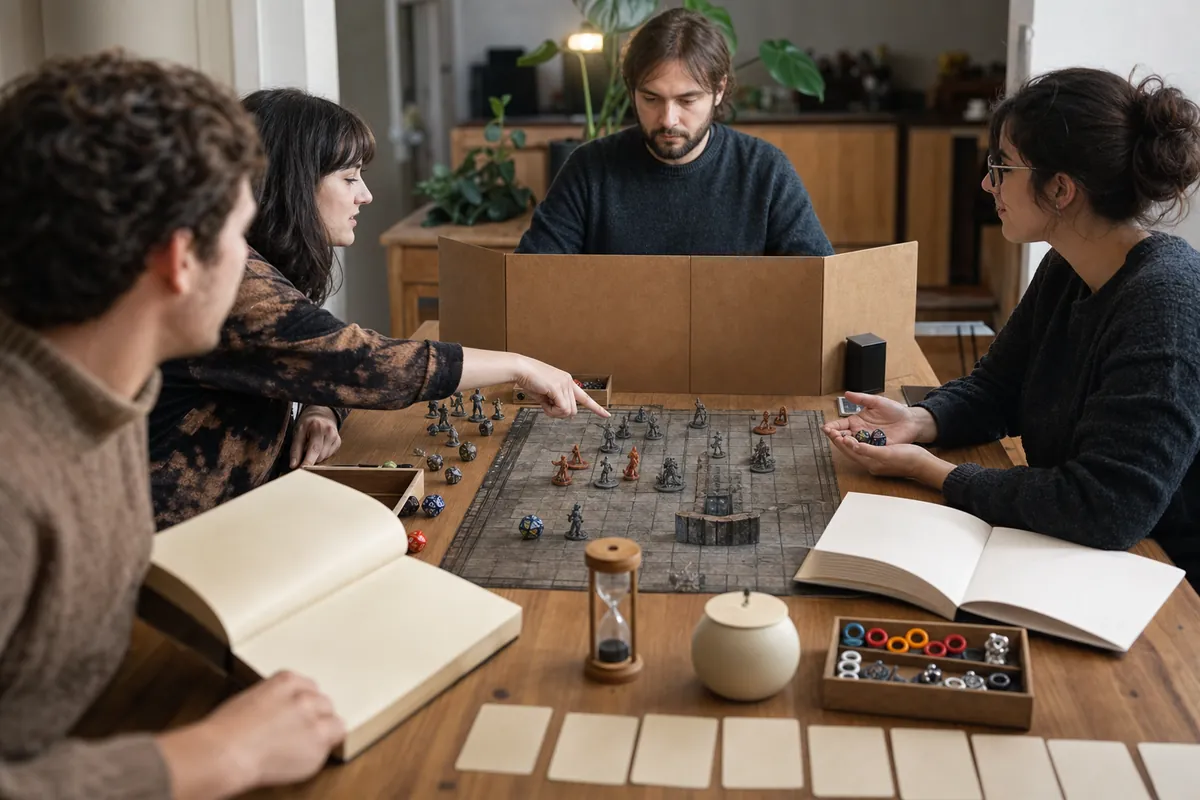
A handful of house rules, agreed on once, save minutes every single round:
- Damage and to-hit in one breath: "I attack, that's a 17 to hit, and 8 damage" instead of three separate exchanges.
- Pre-declared reactions: if a player always uses Shield the same way, let them say "assume Shield unless I say otherwise" so you're not stopping to ask every time.
- One rules question per turn, deferred if bigger: if a rules debate can't be settled in ten seconds, make a ruling and move on, then look it up at the break.
- Batch monster turns: for groups of identical low-threat monsters, roll all their attacks together instead of one at a time.
- Take average damage for minions: using the number printed in the stat block skips a damage roll and the adding up. D&D Average Damage: Formula, Dice Table and Rounding shows how it works, and How Much Should You Roll Damage vs. Take the Average? covers when to roll instead.
These aren't about cutting corners on the rules. They're about making the table's rhythm match the game instead of getting stuck on it.
Should I use a turn timer?
A light-touch timer helps some tables and stresses others out, so match it to your group. A visible sand timer or a phone timer set to 60 seconds works well as a gentle prompt - when it runs out, you just check in rather than skipping the turn. Avoid a hard countdown that punishes slower players, especially newer ones who are still learning their character's options; that kind of pressure tends to make combat feel worse, not faster. If your table struggles with decision paralysis specifically, a soft timer paired with the "on deck" announcement above tends to be the sweet spot.
What tools help track combat faster?
A lot of drag comes from re-deriving the same information every round: who's bloodied, who's concentrating, whose death saves are piling up. Anything that makes that information visible at a glance - instead of something you have to recalculate - shaves real time off every turn.
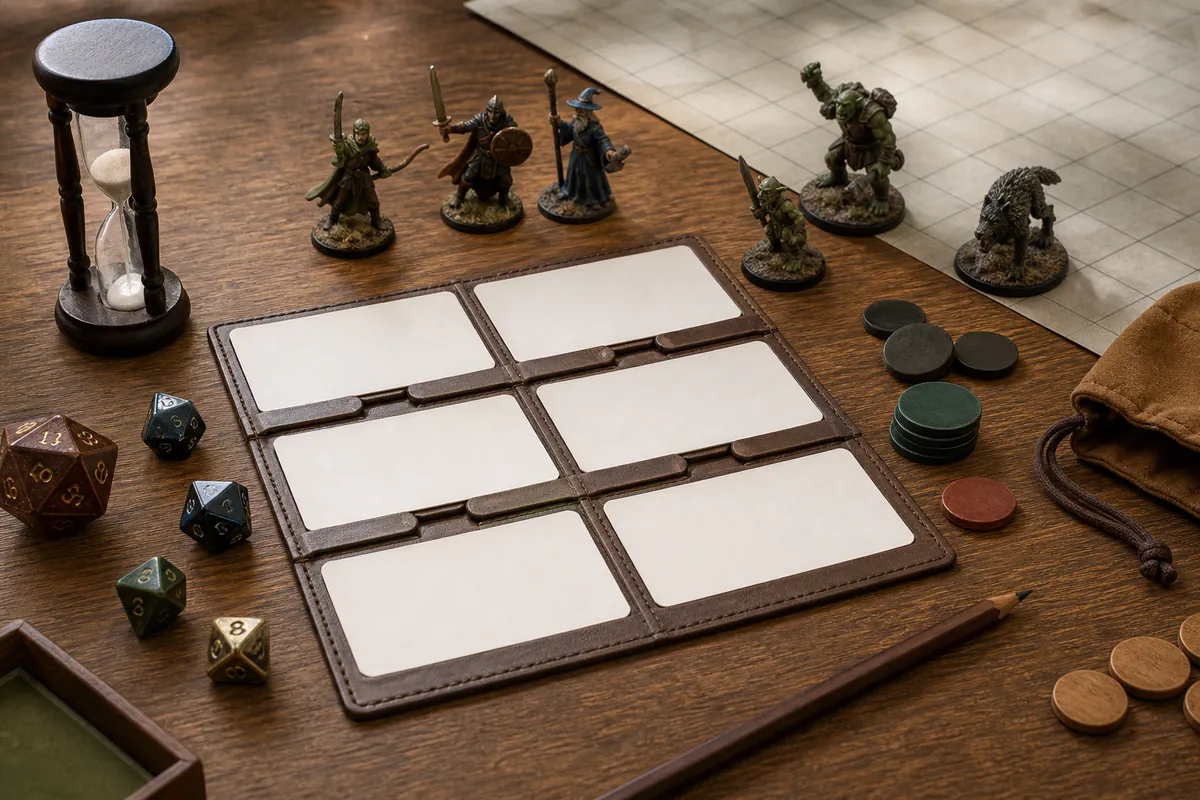
That's the whole idea behind a physical HP and condition tracker at the table: stickers or tokens for HP, spell slots, and death saves mean nobody's asking "wait, how much HP do you have again?" three times a round. If you want something ready to print and cut out, the DnD Tracker and Condition Sticker Sheet Printable covers HP, spell slots, and death save markers as reusable combat tokens, and it pairs well with the spell cards guide if your casters are also the ones slowing turns down. You can browse the rest of the printable shop if you're setting up a full DM binder from scratch.
How fast should a D&D turn actually be?
As a rough target: 30 to 60 seconds for a simple attack turn, up to two minutes for a turn with a real tactical decision or a spell with multiple effects, and a full round somewhere in the six-to-eight-minute range for a four-person party once monsters act. These aren't hard rules, just useful benchmarks - if your table is consistently running double that, it's worth diagnosing which of the bottlenecks above is the real culprit.
Death saves are their own special case for pacing, since they tend to slow a table down through tension as much as bookkeeping. If that's a recurring issue at your table, tracking death saves without killing the tension digs into that specifically.
Speeding up combat isn't about rushing your players or stripping the drama out of a fight. It's about clearing away the friction - lookups, bookkeeping, hesitation - so the table's attention stays on the fight itself, where it belongs.
Frequently asked questions
- How long should a D&D turn take on average?
- For a player with a straightforward attack, aim for 30 to 60 seconds. Turns involving spellcasting, tactical movement, or a big decision can reasonably run up to two minutes, but anything longer usually means the player needs help narrowing their options.
- How long should a D&D combat round take?
- Around six to eight minutes for a four-person party once the monsters have acted. Much longer than that usually points to one of the bottlenecks listed in this guide: decision paralysis, rules lookups, DM bookkeeping, side conversations or math friction.
- Why does D&D combat take so long?
- Most slowdowns come from players deciding what to do instead of playing it, rules lookups mid-turn, and the DM tracking monster stats and conditions by memory. Fixing any one of these speeds things up, but fixing all three has the biggest impact.
- Should I use a turn timer in D&D?
- A soft timer, like a 60-second sand timer or a phone timer that just prompts a check-in, works well for groups that ramble. A hard countdown that forces a bad decision can suck the fun out of combat, so use it as a nudge rather than a punishment.
- Does a smaller party mean faster combat?
- Generally yes. A party of four moves through a round much faster than a party of six or seven simply because there are fewer turns per round. If your table is large, the pacing techniques in this guide matter even more.
- dnd combat
- dungeon master tips
- 5e rules
- game pacing
- dnd tools
Related reading
- How to Make a D&D Magic Item Feel Legendary, Not Just UsefulLearn how to make DnD magic items feel special with sensory detail, personality, and history instead of just stat bonuses.
- D&D 5e Bar Fight Rules: How to Run a Nonlethal Tavern BrawlRun a D&D 5e bar fight without a TPK: make all damage nonlethal, cap brawlers at 3–5 with 4–10 HP, use improvised weapons and set a clear end.
- D&D 5e Conditions Explained: What Each One Actually DoesD&D 5e conditions explained plainly: what blinded, frightened, restrained, and every other status actually does at the table, with quick fixes for ending them.